Epicurus Quotes
There is no such thing as justice or injustice among those beasts that cannot make agreements not to injure or be injured. This is also true of those tribes that are unable or unwilling to make agreements not to injure or be injured.
Epicurus. "Principal Doctrines." The Epicurus Reader: Selected Writings and Testimonia, translated by Brad Inwood and L.P. Gerson, Hackett Publishing, 1994, p. 35.


Viscount Morley of Blackburn. Morley's paraphrase was of a quotation of Rousseau 19 years earlier.


He had written this text on a newspaper when he was jailed in Birmingham for violating a court order not to demonstrate. A common tactic of the Southern segregationists was to have local segregationist judges issue injunctions against civil rights demonstrations on the grounds that they would promote violence. These were generally unconstitutional, but King and others were jailed until the legal appeal could even be heard.


New York Times columnist Bret Stephens wrote a piece criticizing the rationale behind the forced ouster of Times reporter Donald G. McNeil Jr., but it was never published. Stephens told colleagues the column was killed by publisher A.G. Sulzberger. Since then, the piece has circulated among Times staffers and others — and it was from one of them, not Stephens himself, that The Post obtained and published it.
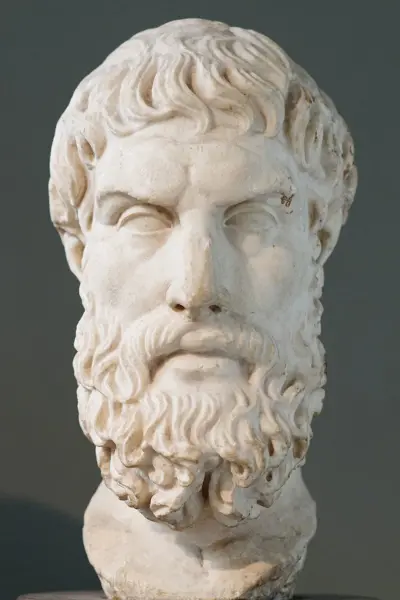
Epicurus (Ancient Greek: Ἐπίκουρος, romanized: Epíkouros; 341–270 BC) was an ancient Greek philosopher and sage who founded Epicureanism, a highly influential school of philosophy. He was born on the Greek island of Samos to Athenian parents. Influenced by Democritus, Aristippus, Pyrrho, and possibly the Cynics, he turned against the Platonism of his day and established his own school, known as "the Garden", in Athens. Epicurus and his followers were known for eating simple meals and discussing a wide range of philosophical subjects. He openly allowed women and slaves to join the school as a matter of policy. Epicurus is said to have originally written over 300 works on various subjects, but the vast majority of these writings have been lost. Only three letters written by him—the letters to Menoeceus, Pythocles, and Herodotus—and two collections of quotes—the Principal Doctrines and the Vatican Sayings—have survived intact, along with a few fragments of his other writings. Most knowledge of his teachings comes from later authors, particularly the biographer Diogenes Laërtius, the Epicurean Roman poet Lucretius and the Epicurean philosopher Philodemus, and with hostile but largely accurate accounts by the Pyrrhonist philosopher Sextus Empiricus, and the Academic Skeptic and statesman Cicero.
