Booker T. Washington Quotes
There is no power on earth that can neutralize the influence of a high, simple and useful life.
Washington, Booker T. Up from Slavery: An Autobiography. Doubleday, Page & Co., 1901, p. 55.


He was representing the Muslims of India. These are the descendants of the millions of Muslims who preferred to remain in majority Hindu India rather than join the new Islamic state of Pakistan. There are almost as many Muslims today in India as there are Muslims in Pakistan and more than there are in the Arab countries. However, unlike Pakistan, India is a democracy. However, the Indian Islamic leaders question whether or not they can turn the Islamic vision into a lasting Islamic culture without the force and power of the state. Only Turkey amongst the Islamic countries has been able to maintain an Islamic culture without using the political and legal force of the state to do it. But many Islamic orthodox thinkers believe that the Islamic culture in Turkey has been weakening over the years. Essentially, their concept of a permanent and stable Islamic culture requires the force of the state as that has been the historical experience. So there is constant pressure on the Indian government to pass laws that (for Muslims) enforce or require certain aspects of Islam, like parts of Sharia law while most Indian politicians are committed to maintaining a democracy with a separation of church and state.


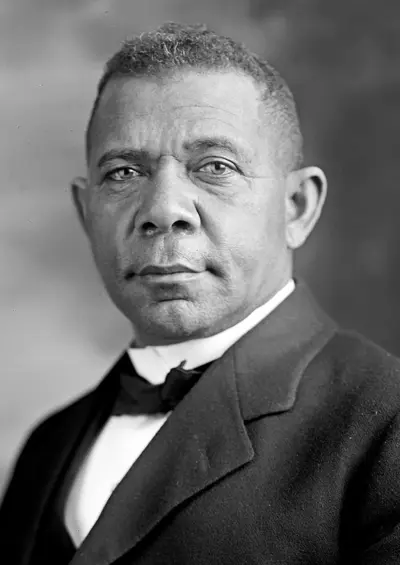
Booker Taliaferro Washington was an American educator, author, orator, and adviser to several presidents of the United States. Between 1890 and 1915, Washington was the dominant leader in the African American community and of the contemporary black elite. Washington was from the last generation of black American leaders born into slavery and became the leading voice of the former slaves and their descendants. They were newly oppressed in the South by disenfranchisement and the Jim Crow discriminatory laws enacted in the post-Reconstruction Southern states in the late 19th and early 20th centuries.
