Milton Friedman Quotes
There is no logical basis for the prohibition of marijuana. $7.7 billion is a lot of money, but that is one of the lesser evils. Our failure to successfully enforce these laws is responsible for the deaths of thousands of people in Colombia. I haven't even included the harm to young people. It's absolutely disgraceful to think of picking up a 22-year-old for smoking pot. More disgraceful is the denial of marijuana for medical purposes.
Friedman, Milton. Interview by Randy Paige. America's Drug Forum, 1991.


President Barack Obama had the week before, made a speech observing the fact that marijuana was less dangerous then alcohol.


He was also a paid lobbyist for the beer industry.
The DEA is the Drug Enforcement Administration.

This was a great surprise to most conservatives who assumed that Robertson, a major conservative leader and ordained minister would be opposed to drug legalization.


Although only a minority of Americans advocated legalization of Marijuana at the time, Nixon brought his notorious anti-Semitic point of view to bear on a situation where the overwhelming majority of Marijuana legalizers were Christian. There were Jews as well – in particular some prominent Jews such as Nobel Prize-Winning Economist Milton Friedman who recommended against marijuana use, but argued against government making it illegal. This was a position held by most Libertarians, many liberals, and many conservatives like Friedman.

Perry was an extreme right wing law and order conservative, but like many extreme rightists had a streak of libertatrianism.
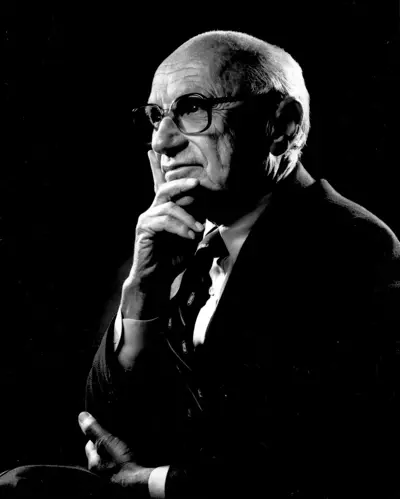
Milton Friedman was an American economist and statistician who received the 1976 Nobel Memorial Prize in Economic Sciences for his research on consumption analysis, monetary history and theory and the complexity of stabilization policy. With George Stigler and others, Friedman was among the intellectual leaders of the Chicago school of economics, a neoclassical school of economic thought associated with the work of the faculty at the University of Chicago that rejected Keynesianism in favor of monetarism until the mid-1970s, when it turned to new classical macroeconomics heavily based on the concept of rational expectations. Several students and young professors who were recruited or mentored by Friedman at Chicago went on to become leading economists, including Gary Becker, Robert Fogel, Thomas Sowell and Robert Lucas Jr.
