Samuel P. Huntington Quotes
There is no Americano dream. There is only the American dream created by an Anglo-Protestant society. Mexican-Americans will share in that dream and in that society only if they dream in English.
He was speaking metaphorically here. Literally dreaming in English is not his requirement. What is required is an outlook, perception, value system, and national identity that is American. Lack of English language proficiency makes that much harder to achieve.
Samuel P. Huntington, Who Are We?: The Challenges to America's National Identity , 2004
Sourced by: Eigen's Political and Historical Quotations

This quotation became a very polarizing stimulus in the country with anti-immigration people using it in support of their program to restrict immigration and with liberals and Hispanic groups who saw the quotation as a discriminatory unfounded charge.


He was referring to the fact that the Spaniards had not only explored but settled much of America before the English settlers ever came. When Americans came to Texas, New Mexico, Arizona, Colorado and California, the Hispanics were already there and had been for some time. Spanish was the language of all these states before they were states and of many of the residents after they had become states. When the United States bought New Mexico and Arizona from Mexico, Spanish was the principle language in those territories. Those that would argue that immigrants should not bring new languages to America have little knowledge of history. Spanish was spoken in much of America long before anyone ever said a word in English.

The Christian Evangelicals in America have been split on their views of immigration. See {632917} for an example of a contrary position.


Belgium is comprised of an amalgam of two separate nations and cultures, Walonia and Flanders. They spoke a different language and had very different economies and world views. Destree was distressed that few people saw themselves as Belgians—They were either Flemish or Waloons. There was at the time no concept of a nation even though there was a king and the rest of the world recognized one country.
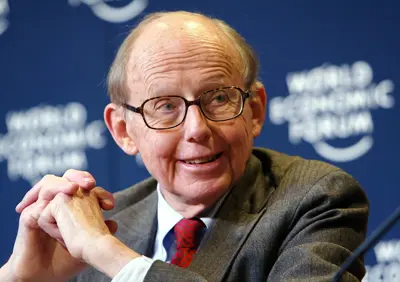
Samuel Phillips Huntington was an American political scientist, adviser and academic. He spent more than half a century at Harvard University, where he was director of Harvard's Center for International Affairs and the Albert J. Weatherhead III University Professor.
