Hisham Matar Quotes
There is a tendency to over-exaggerate and over-romanticise the place of a writer in a revolution. That bothers me. I think it's inappropriate.
Matar, Hisham. Interview. The Guardian, 2011.


In 1927 there was a Peasant Uprising in the Hunan Province of China. Young Mau went there and wrote a report. Mao and other young communist leaders had a much more acute appreciation of sloganeering than their older revolutionary comrades. Even into the 3rd millennium, the same “Down with Imperialism” slogan could be heard in many part of the world, long after the Soviet Union collapsed and China and become capitalistic.

This was one of the first of the world communist leaders who had concluded that the Russian communist state and its revolution had failed. Russia of 1923 was perceived as too dictatorial and not democratic enough. At the same time they thought Russia had not only sold out the democratic nature of communism but also the economic as well by having too much private property and making economic deals with Western capitalists giving concessions of all kinds to Krupp and other major Multinational companies to try and develop international trade and investment. Politically the communist critics thought Russian communism too left wing and undemocratic and economically too right wing and capitalistic.

While Lenin was admired for his skill by his revolutionary colleagues, many had their concerns.


She was one of the few Western journalists who was in Russia at the outbreak of the Russian Revolution.


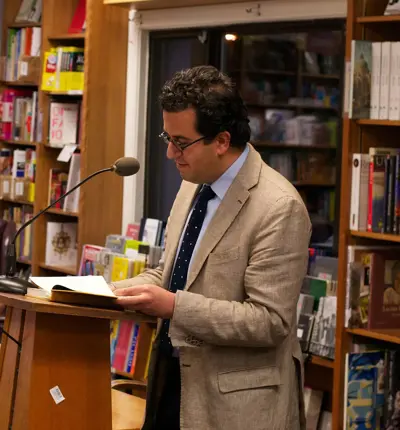
Hisham Matar (Arabic: هشام مطر) (born 1970) is an American born British-Libyan writer. His memoir of the search for his father, The Return, won the 2017 Pulitzer Prize for Biography or Autobiography and the 2017 PEN America Jean Stein Book Award. His debut novel In the Country of Men was shortlisted for the 2006 Man Booker Prize. Matar's essays have appeared in the Asharq al-Awsat, The Independent, The Guardian, The Times and The New York Times. His second novel, Anatomy of a Disappearance, was published to wide acclaim on 3 March 2011. He lives and writes in London.
