Jimmy Carter Quotes
There is a strong religious commitment to the sanctity of human life, but, paradoxically, some of the most fervent protectors of microscopic stem cells are the most ardent proponents of the death penalty.
Jimmy Carter, 39th President of the United States (Democrat, GA), Our Endangered Values, 2005
Sourced by: Eigen's Political and Historical Quotations

George W. Bush followed his deeply held religious belief and that of a small, but controlling religious fundamentalist segment of the Republican Party and banned Federal funding of scientific research that involved fetal stem cells. The thinking of the religious fundamentalist was that if fetal stem cell research were to be extensive there might be a demand for the fetal cells which could come from abortion. This might create more abortions and it would mean that something good might result from a terrible evil—an abortion. This in turn might make abortion less terrible for some people and produce some moral ambiguity. At the same time there are tens of thousands of fertilized embryos available from in vitro fertilization procedures where extras are produced but usually not needed and often are disposed of as waste. However, these fundamentalists do not want to even allow those to be used. Hence, the “insanity” characterization which is more accurately illogicality.


One of the extreme religious fundamentalists in the Congress, Brownback was referring to Federally funded medical research which uses embryonic stem cells. The cells are generated from in vitro fertilization procedures and potentially if implanted in the womb of a woman could produce a child. Several cells are produced by the fertilization process but typically only one or two is needed. So some religious extremists believe that just because the cell has the potential for human life, it is human life. This is the same logic which opposes birth control on the grounds that sperm and egg cells are incipient life forms. It was as late as 1973 that bans on birth control devices were declared unconstitutional be the Supreme Court.


Churches are political organizations too and are subject to the forces of their membership. In the case of the Southern Baptist Convention in 1971 they passed resolutions to assure the right of a woman to have an abortion to protect her health. The position on abortion changed steadily thereafter to even pass Constitutional amendments to ban abortions except to save the life of the mother. See {614356},54122, {614358}, {614359}, {614360}, {614361} for the dynamic history of the change.


When couples use in vitro fertilization to have children, they usually produce several fertilized embryos one of which is implanted into the womb of the mother. The other embryos can produce stem cells which are cells that can grow into any other kind of cell—brain cells, bone, cells, kidney cells, stc. Therefore they have the most promise for medical research. However, some people regard the embryos as human beings at an early stage of development and see the embryos as life. For them the notion of using that “life” for medical research where a human being will not be produced but instead a medicine or replacement cells for a sick person crosses a moral line of what is proper for a life form. Others observe that the embryos are kept alive in freezers and will be thrown away if not needed so why not use them to help mankind. At the other extreme some are opposed to allowing in vitro fertilization to begin with, but there have been over a million people born with this technique to couples who otherwise would not have been able to have children.


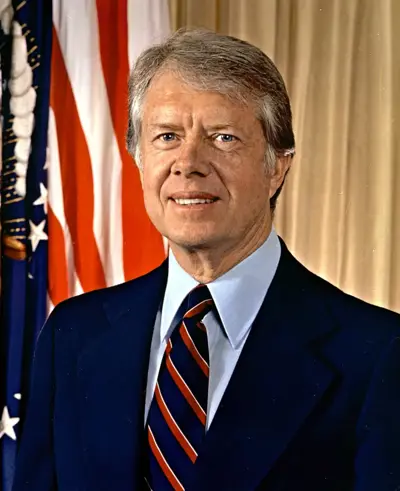
James Earl Carter Jr. is an American politician, businessman, and philanthropist who served as the 39th president of the United States from 1977 to 1981. A member of the Democratic Party, he previously served as a Georgia State Senator from 1963 to 1967 and as the 76th governor of Georgia from 1971 to 1975. Since leaving the presidency, Carter has remained engaged in political and social projects as a private citizen. In 2002, he was awarded the Nobel Peace Prize for his work in co-founding the Carter Center.
