Christopher Hitchens Quotes
There is a limit to the success of conservative populism and the exploitation of "little guy" or "silent majority" rhetoric, and it is very often reached because of the emaciated, corrupted personalities of the demagogues themselves.
Hitchens, Christopher. No One Left to Lie To: The Triangulations of William Jefferson Clinton. Verso, 1999.


Douglas had Presidential ambitions and was a Democrat. Greeley, a supporter of the new Republican party had the New York Tribune endorse Douglas for the nomination, knowing that Tribune support would alienate many Southerners and draw support away from Douglas

Mencken was a brilliant and funny but pompous snob who had little respect for the average person.


Kennedy although sharing some of the pro-Nazi sentiments of Coughlin was one of the first political leaders to recognize Coughlin as a danger. He was one of those instrumental in convincing the Vatican to shut down the priest’s political activities.


This point of view is not held by the majority of politics thinker but it is the view of more than a few. Others argue that it is a response to decades of undemocratic conservative policies. Still others argue that it is a response to decades of undemocratic unfair and unequal results of policies—liberal or conservative. In America, the inequality gap that produced the publish at the time of his quotation had ben the result of 40 years of Democratic and Republican control; and policies, liberal and conservative,

Lame was not opposed to civil rights as some who read this quotation sometimes conclude. He did think that much of the lack of success of minorities in America could be ameliorated by many self-improvement and individual efforts. His reference to destroying America, was an interesting rhetorical technique of assuming that what you advocate is not implemented and showing that it leads to disaster. Phrased this way, it gets and focuses the attention of an audience.
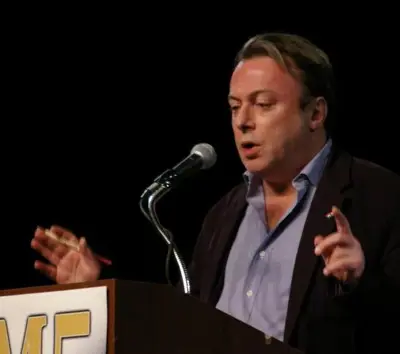
Christopher Eric Hitchens was an English-American intellectual, polemicist, and socio-political critic, who expressed himself as an author, orator, essayist and columnist. He wrote, co-wrote, edited or co-edited over 30 books, including five of essays on culture, politics and literature. Having contributed to several publications, he is broadly regarded as one of the most influential atheists of all time.
