Lyndon B. Johnson Quotes
There can no longer be anyone too poor to vote.
Johnson, Lyndon B. "Remarks Upon the Ratification of the 24th Amendment to the Constitution." Public Papers of the Presidents of the United States: Lyndon B. Johnson, 1963-64, Volume I, Government Printing Office, 1965, p. 265.


He was referring to Negroes who did not then have the fight to vote.


This was a classic debate over universal male suffrage. Rainborough had made a forceful argument for equality as a spokesperson for the Levellers in this famous debate. Ireton (See {619711}) eloquently gave the classic counter-argument that property owners had much more at stake and therefore should have much more of a say on governmental affairs. Early America actually sided with Ireton but modern America holds with Rainborough.


This phrase was also to be used over 100 years later by Malcolm X. See {624101} and {38291}.


Slogan that Theodore Roosevelt developed to go with this attempt to nominate Presidents with Primary Elections. Prior to his 1912 run for the Presidency, presidential nominees were selected by the delegates to the party national convention. Since then the parties have used various combinations of delegates that were bound by primary election results in their state and other delegates who could use their judgment. No combination has been totally satisfactory and both major American political parties tinker with the combination every four years.


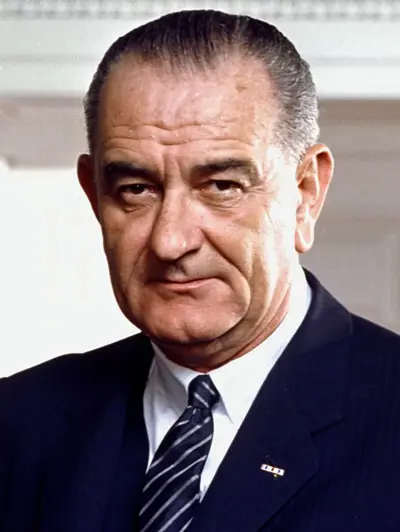
Lyndon Baines Johnson, often referred to by his initials LBJ, was the 36th president of the United States, in office from 1963 to 1969. He served as the 37th vice president from 1961 to 1963 and assumed the presidency following the assassination of President John F. Kennedy. A Democrat from Texas, Johnson was also a United States representative and later majority leader in the United States Senate. Johnson is one of only four people to have served, at various times, in all four federal elected positions.
