Fyodor Dostoevsky Quotes
There are three forces, the only three forces capable of conquering and enslaving forever the conscience of these weak rebels in the interests of their own happiness. They are: the miracle, the mystery and authority.
Dostoevsky, Fyodor. The Brothers Karamazov. Translated by Constance Garnett, Macmillan, 1912, p. 270.


A large part of German propaganda was directed not only to Germans and the Axis, but one target was Englishmen and Americans. One objective was to try and cause strains in the amazingly strong British-American Alliance. In this cartoon Roosevelt—the large adult figure—is leading the small child, Churchill, by the hand. Many British were sensitive about this possibility.


He was tried and executed in secret in 1953.


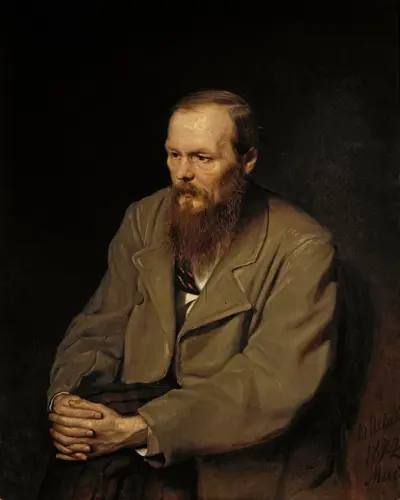
Fyodor Mikhailovich Dostoevsky, sometimes transliterated as Dostoyevsky, was a Russian novelist, philosopher, short story writer, essayist, and journalist. Dostoevsky's literary works explore human psychology in the troubled political, social, and spiritual atmospheres of 19th-century Russia, and engage with a variety of philosophical and religious themes. His most acclaimed works include Crime and Punishment (1866), The Idiot (1869), Demons (1872), and The Brothers Karamazov (1880). Dostoevsky's body of works consists of 12 novels, four novellas, 16 short stories, and numerous other works. Many literary critics rate him as one of the greatest psychological novelists in world literature. His 1864 novel Notes from Underground is considered to be one of the first works of existentialist literature.
