Alexander Hamilton Quotes
There are still to be found visionary or designing men, who stand ready to advocate the paradox of perpetual peace between the states, though dismembered and alienated from each other.... The genius of republics, say they, is pacific; the spirit of commerce has a tendency to soften the manners of men, and to extinguish those inflammable humours which have so often kindled into wars. Commercial republics, like ours, will never be disposed to waste themselves in ruinous contentions with each other. They will be governed by mutual interest, and will cultivate a spirit of mutual amity and concord.
Hamilton, Alexander. "The Federalist No. 6." The Independent Journal, 14 Nov. 1787.

This seems to be the origin of the notion that democracies and republics are less likely to war with others than monarchies or dictatorships.


China, after overthrowing the Manchu Dynasty was struggling among many factions for control of the government.


There was a small but influential pro-Nazi segment of British society which had a small parallel in the United States. Even the Duke of Windsor had pro-German sympathies as did the American Ambassador to England, Joseph Kennedy (father of JFK) see {610119}.


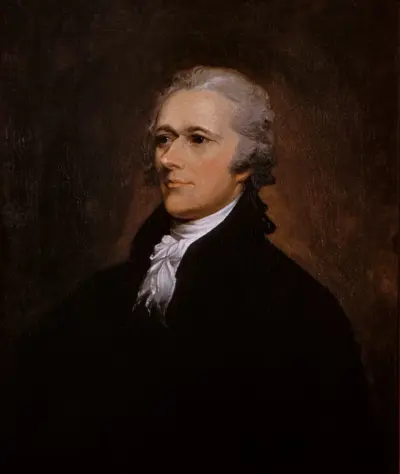
Alexander Hamilton was an American statesman, politician, legal scholar, military commander, lawyer, banker, and economist. He was one of the Founding Fathers of the United States. He was an influential interpreter and promoter of the U.S. Constitution, as well as the founder of the nation's financial system, the Federalist Party, the United States Coast Guard, and the New York Post newspaper. As the first secretary of the treasury, Hamilton was the main author of the economic policies of George Washington's administration. He took the lead in the federal government's funding of the states' debts, as well as establishing the nation's first two de facto central banks, the Bank of North America and the First Bank of the United States, a system of tariffs, and friendly trade relations with Britain. His vision included a strong central government led by a vigorous executive branch, a strong commercial economy, government-controlled banks, support for manufacturing, and a strong military.
