Jehudi Ashmun Quotes
There are in the colony more than a dozen healthy persons who will receive no more provisions out of the public store until they earn them.
In the early colony of Liberia each man was supposed to work 2 days a week for the community in exchange for public stores. Ashmun was the agent of the colonial society that provided funds to get the colony started, but he became a political issue. While many of the whites of the Colonial Society were abolitionists, many others were not and just wanted to get rid of free Blacks. Ashman however was an outspoken foe of the slave trade and the latter group, in retaliation for his public attacks on the slave trade, withdrew their ‘confidence” in him and refused to honor his bank drafts or even to provide funds for his subsistence and remuneration. The colony was thus in chaos, and a number of men went on a work strike in protest of the political fight in the society affecting them. To prevent complete chaos and maintain some unity and discipline in the colony, Ashmun issued this order. Things calmed down in the colony but the society continues its politicking with different views on slavery the cause of the strife.
Jehudi Ashmun Order Issued in the Free Black Colony of Liberia 1823
Sourced by: Eigen's Political and Historical Quotations

Mormons have been divided on this issue. Many Mormons do accept welfare, and government subsidies for agriculture and other business corporate welfare and some hold with Benson’s view and would not accept for example agricultural subsidies for not growing crops. Ironically, Benson, as the Secretary of Agriculture, presided over the nation’s largest give-away program for not working: agricultural subsidies. However, this statement was made after his government service and was made as President of the Mormon Church.

Free Negroes were banned by many states and local governments or otherwise restricted in their movements and occupations. The “safety of society” referred to the belief of most Southern whites that the mere presence of free Negroes would undermine the slavery system and encourage slave revolts and retribution against the slave owners. At this point Jefferson was considering a plan to patriot Negroes back to Africa. Jefferson, at this point, thought that this might be the fairest and best solution for all.
_0_thumbnail_47x47.jpg "A portrait of Richard Allen, a Methodist bishop and founder of the African Methodist Episcopal Church")
Many whites thought that the solution to the problem of free and emancipated Negroes was to send them to Africa. They assumed that the negroes would by desirous of that solution also, but they rarely asked them. When they did, they received answers much like this one from one of the leading Black clergymen in America.

In 1820, convoyed by the war-sloop Cyane, American free Negroes (33 men ,18 women and some children) set out for Africa pursuant to a new program authorized by Congress and President Monroe. However, the details of the endeavor had not been worked out and after the Negroes’ experience in the U. S. the would-be settlers were suspicious of all government.

The Freedmen’s Bureau was an institution established after the Civil War to provide assistance to the newly emancipated and free slaves. Every constructive step taken by the Bureau was opposed and obstructed by “unreconstructed” Southerners and some Northerners. They had very limited resources and there was little known technically about how to accomplish their mission. However, tens of thousands of individual new freed Negroes profited immensely and there were some systemic successes such as Du Bois describes Quotation 643644. There were also some failures as described herein.


Jefferson was referring to a plan then proposed and discussed to establish a colony in Africa which would be populated with free American Negroes and slaves when and if slavery could be ended. See Quotation xxx.


Liberia was founded by freed American slaves.

The American Colonization Society established the nation of Liberia in Africa for American Blacks. Approximately 15,000 Blacks chose to emigrate.


This is one of the reasons that Denmark is referred to as a “Welfare State.”


[This was the first Abolition appeal written by a Black Man. It was published in Boston and was very popular going through two more printings within the next two years.]


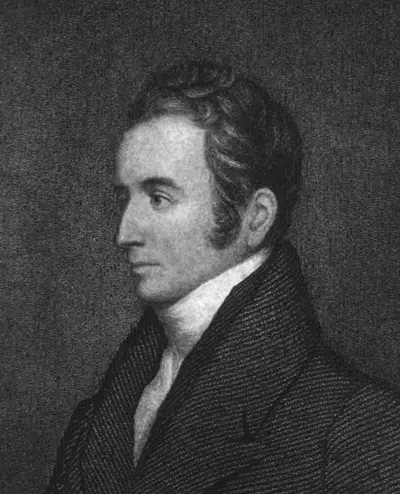
Jehudi Ashmun was an American religious leader and social reformer from New England who became involved in the American Colonization Society. It founded the colony of Liberia in West Africa as a place to resettle free people of color from the United States.
