Jacques Ellul Quotes
There are different forms of anarchy and different currents in it. I must, first say very simply what anarchy I have in view. By anarchy I mean first an absolute rejection of violence.
Ellul, Jacques. Anarchy and Christianity. Translated by Geoffrey W. Bromiley, William B. Eerdmans Publishing Company, 1991, p. 11.


It is hard for us today to understand why intelligent, thoughtful, people would seriously consider and even advocate anarchy. Yet there were many intelligent people who preached anarchy. The key to understanding this is that it is also hard for us to realize how terrible and actually dangerous was typical life under the Russian Government of the Czars. It was not only that most people were serfs--virtually slaves, but the government officials, the military and civilian both, could and did, abuse people in every way imaginable. In America today, if any of us were unfortunate to be the victim of violence, the odds are high that it would be at the hands of another citizen. In Russia (and other countries) at the time, the odds were that the perpetrator of the violence was a government official or government sanctioned person—police, military, aristocrats, civil officers. As but one example. Cossacks would frequently get drunk, pillage and rape a community and kill any who resisted—all with impunity. This quotation from Tolstoy is the classic argument of the anarchist at the time. It was impossible that the absence of government could be as bad as the government then was.

Anarchists were of two kinds, One condoned and urged violence; the other did not. Most law enforcement authorities lumped the two together and saw anarchists as terrorists.


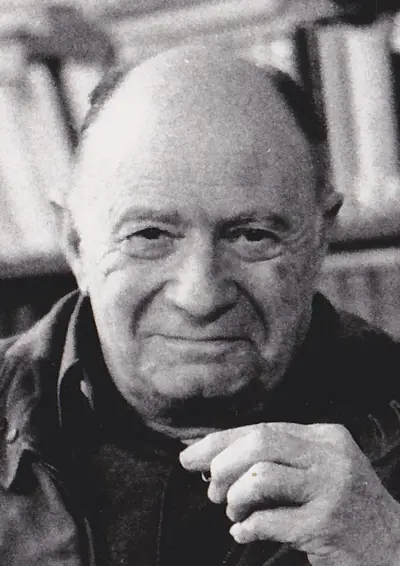
Jacques Ellul was a French philosopher, sociologist, lay theologian, and professor who was a noted Christian anarchist. Ellul was a longtime Professor of History and the Sociology of Institutions on the Faculty of Law and Economic Sciences at the University of Bordeaux. A prolific writer, he authored more than 60 books and more than 600 articles over his lifetime, many of which discussed propaganda, the impact of technology on society, and the interaction between religion and politics.
