Ben Nighthorse Campbell Quotes
The young men felt that they were denied manhood
by giving up raiding and war parties. The Indian nations of America were as diverse as the different peoples of Europe. Many tribes were farmers and cattle raisers. Some tribes traditionally were always engaged in hostilities of war, albeit these were usually small raids or war parties. For a culture where one “became a man” by going on a raid, the idea of a peace treaty with the whites in the area was difficult to accept. Enemy Indian tribes had been removed to other reservations and could not venture out easily. The result was there was no one to raid but the whites. Peace with whites meant no raids, and no raids meant no right of passage. No one could become a war chief if there were no wars. Peace was an enormous cultural inhibitor for some tribes.
Ben Nighthorse Campbell, U.S. Congressman & Senator (Democrat, CO), Explanation of the reasons why young Indian men refused to give up war parties, Narration of PBS program, The West, 2004
Sourced by: Eigen's Political and Historical Quotations


This quotation illustrates what a misogynist Limbaugh was. An Italian “study” claimed that there was a difference in penis size. The study was never replicated and the results are very doubtful. However, the notion that the cause and responsibility for male sexual size shrinkage is feminism is so physiologically absurd that his irrationality over gender issues becomes clear.


Lehmann was captured by the Apache when he was 11 and brought up as an Apache brave. He went on raiding and war parties, killed and scalped other whites, and represents a good example of the physiological conditioning that young people are susceptible to if brought up in other cultures. Also it shows that values and cultural characteristics are learned and not products of birth and genes.

She was the first Black woman to be elected to Congress and was the first Black woman to actively campaign for the Presidency


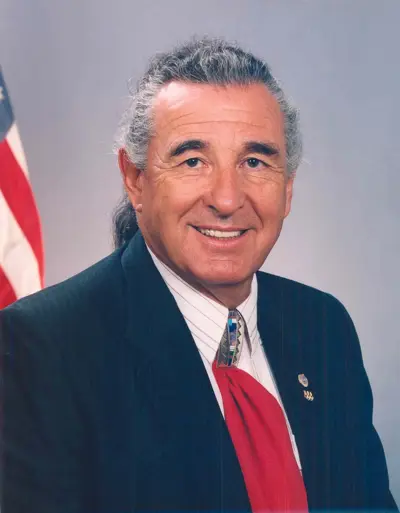
Ben Nighthorse Campbell is an American Cheyenne politician who served as a U.S. Representative from 1987 to 1993, and a U.S. Senator from Colorado from 1993 to 2005. He serves as one of forty-four members of the Council of Chiefs of the Northern Cheyenne Indian Tribe. During his time in office, he was the only Native American serving in the U.S. Congress. As of 2021, he is the last Native American elected to the U.S. Senate.
