Gus Hall Quotes
The wrecking crew
Hall and a few other American communists saw the democratization of the Soviet Union as the destruction of something fine and worthy.
Gus Hall, 1910-2000, General Secretary of the American Communist Party, Communist Candidate for President, Description of Mikhail Gorbachev and Boris Yeltzin
Sourced by: Eigen's Political and Historical Quotations


The objective was not just to win battles but to make it impossible for the area to support any kind of military operation thereafter.

The Italian Communists were culturally and ideologically very different from the Russian Communists. The Italian view was a more nationalistic one and was closer to a Socialist Democracy than a “dictatorship of the proletariat”. Much more tolerant of diversity and not as ideological. See {637829} as a big example of the difference. Yet this was still in the midst of the Red Scare in America and some other areas of the West. After WWII, the CIA had secretly spent millions to get Italians to vote for the non-Communist candidates and helped organize Italian anti-Communist politicians who didn’t want the Communists to alter the Italian government to reflect any Communist or Socialist ideas. Meanwhile, the Italian party was under great pressure from Russia and some of the other Communist satellite countries to adopt a hardline revolutionary communist programs. Berlinquer and other Italian Communist leaders had many misgivings about Russian style Communism and they had to play off one side against the other for years.

Many Americans believed that the Communist government of Russia was softening its world revolution doctrine as the Communist government was concentrating on coping with the huge problems they faced. He argued that there was no ideological mellowing. Immediately after the Russian Revolution, the provisional government appointed him as Ambassador to the United States. However, the provisional government was supplanted when the Bolsheviks took over. Not enamored of Communism, he stayed in the United States with many other Russian refugees.


Milton Friedman.is a Nobel Prize winning ultra-capitalistic, free market, economist whose viewpoint was at the opposite extreme of the communists.

Grigory Zinoviev was one of the original leaders of Revolutionary Russia and the early Communist Russian Government. The reason that this is a noteworthy quotation is that it shows that flip flops and hypocrisy seem to be present in all political systems, democratic as ours is as well as others.

In 1905, she and her husband—young, intellectual middle class, revolutionists from Moscow—escaped from the Czar’s secret police and emigrated to America where until 1917, she feared assassination by Czarist agents in America. After the Civil Rights Act and the Voting Rights Act were passed, she felt that all her utopian, communist dreams had been fulfilled--in America. But Russia, in many ways, were as bad then as in the days of the Czars. See {634475} and {634476} for her views on communism. Many of the American “leftist communists” were great admirers and lovers of America except for the legal and governmental support of segregation. When that went, America was their ideal.


This quotation illustrates White’s favorable view of Russia. Note his use of the “it works” phrase which he picked up from Stefens’ famous quote {634892}. At the time the Soviet Union had been perceived by many economists to have been a great economic improvement over Czarist Russia. And over all, Russia which in 1917 was an economic basket case, had become one of the stronger states in Europe although the Russian people paid a horrendous price. Most historians agree that White passed classified information to the Russians. He was accused of being a Communist, but there was never any evidence of that. Some people believe that he was a spy for the Russians and committed espionage, but others disagree observing that White was very much his own man and felt that much information that was classified never should have been. White substituted his own judgment, it is believed, about what could be given to the Russians for the security system. He was an admirer of what Russian socialism had accomplished economically, educationally and medically since the 1917 revolution deposing the Czar. Russia had been a valuable military ally, which had taken the brunt of both military and civilian casualties in WWII. White’s economics were certainly not Marxist but very much Keynesian. He was subpoenaed by the House Un-American Activities Committee where he was accused of being a Communist which he denied (see {634907}). He died of a heart attack 3 days later.

He served as a liaison with the Russian military officers after WWII. As a result he developed friendships with some who told him much about Stalin and the Communist party of the Soviet Union.


This was a very important quotation in that Sartre was a very influential liberal philosopher and when he condemned Russian communism, many other liberals opposed communism, and those who had already felt vindicated in their decision.


So many Afghans thought very differently and resisted Amin’s Government and the Russians, that the Russians pulled out of Afghanistan.
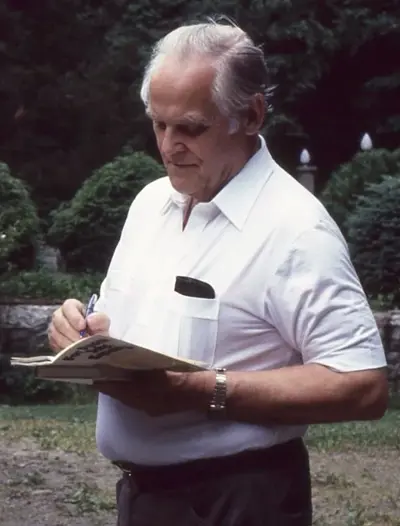
Gus Hall was a leader and chairman of the Communist Party USA (CPUSA) and its four-time U.S. presidential candidate. As a labor leader, Hall was closely associated with the so-called "Little Steel" Strike of 1937, an effort to unionize the nation's smaller, regional steel manufacturers. During the Second Red Scare, Hall was indicted under the Smith Act and was sentenced to eight years in prison. After his release, Hall led the CPUSA for over 40 years, often taking an orthodox Marxist–Leninist stance.
