Frederick the Great Quotes
The word of a private person involves in misfortune only a single human being, while that of sovereigns can create calamities for entire nations. The question may therefore be summed up thus: Is it better that a nation should perish, or that a sovereign should break his treaty? Who can be stupid enough to hesitate in answering this question?
Frederick II, 1712-1786, [The Great], King of Prussia, Memoirs
Sourced by: Eigen's Political and Historical Quotations


This quotation is an excellent example of a kind of political statement that sounds terrific at first, but when you think about it, it is hard to determine what it means. It is clearly some kind of criticism of international and multinational organizations but it is impossible to know what the candidate is proposing. He does not urge that the US not participate in the multilateral organizations? He warns that when we do participate, we should not cede our moral authority to them. But no one can determine had a sovereign nation like the United State cedes any moral or other kind of authority by participating in these organizations.


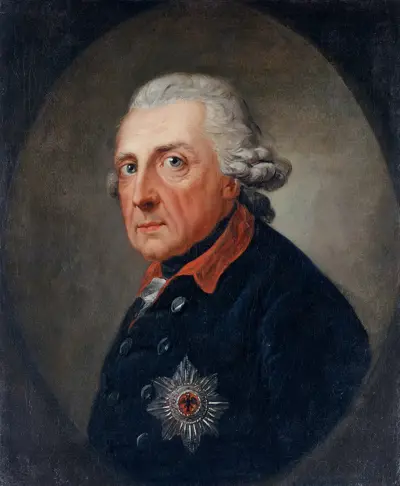
Frederick II was a Prussian king and military leader who ruled the Kingdom of Prussia from 1740 until 1786, reigning longer than any other Hohenzollern king. His most significant accomplishments during his reign included his reorganization of Prussian armies, his military successes in the Silesian wars and the Partitions of Poland, and his patronage of the arts and the Enlightenment. Frederick was the last Hohenzollern monarch titled King in Prussia and declared himself King of Prussia after annexing strategic parts of the Polish–Lithuanian Commonwealth in 1772. Prussia greatly increased its territories and became a leading military power in Europe under his rule. He became known as Frederick the Great (German: Friedrich der Große) and was nicknamed "The Old Fritz" (German: "Der Alte Fritz") by the Prussian people and eventually the rest of Germany.
