Axel Munthe Quotes
The wild, cruel beast is not behind the bars of the cage. He is in front of it.
Munthe, Axel. The Story of San Michele. E. P. Dutton & Co., 1929.


The Smithsonian had started a “Department of Living Animals” and had 172 at the time whereas earlier all animals were stuffed. At the time no one was quite sure whether or not there would be any public interest in a zoo. This initial request for $200,000 to buy property on which to place the zoo was turned down as historically zoos were created by royalty and the very rich and didn’t seem democratic to many members of the House. Others however, saw the role of democracy as bringing to ordinary people what had historically been available only to royalty and the wealthy. That view eventually prevailed in America, and the National Zoo is a destination for millions of Americans and foreign tourists. In the next session of Congress, the House reversed itself and voted the appropriation for the National Zoo. See {629320}.

Thomas Jefferson used this quotation in one of his arguments against slavery. Jove was the most powerful of the Ancient Greek Gods.


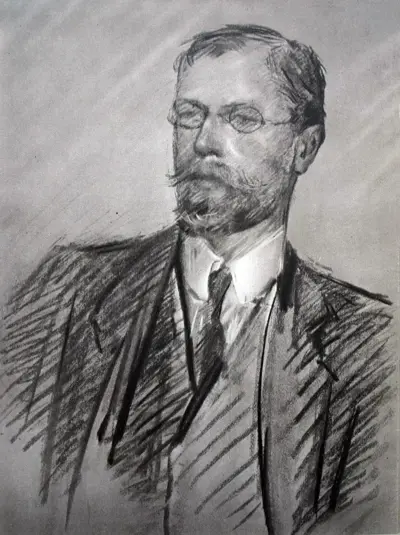
Axel Martin Fredrik Munthe was a Swedish-born medical doctor and psychiatrist, best known as the author of The Story of San Michele, an autobiographical account of his life and work. He spoke several languages (Swedish, English, French, Italian fluently, and German at least passably), grew up in Sweden, attended medical school there, then studied médecine in Paris and opened his first practice in France. He was married to a wealthy Englishwoman and spent most of his adult life in Italy. His philanthropic nature often led him to treat the poor without charge, and he risked his life on several occasions to offer medical help in times of war, disaster, or plague. As an advocate of animal rights, he purchased land to create a bird sanctuary near his home in Italy, argued for bans on painful traps, and himself kept pets as diverse as an owl and a baboon, as well as many types of dog. His writing is light-hearted, being primarily memoirs drawn from his real-life experiences, but it is often tinged with sadness or tragedy, and often uses dramatic licence. He primarily wrote about people and their idiosyncrasies, portraying the foibles of both the rich and the poor, but also about animals.
