Armand Assante Quotes
The whole industry is so screwed up by economics. It's disgusting to me.
Rothstein, Mervyn. "Armand Assante." Cigar Aficionado, M. Shanken Communications, Mar.-Apr. 1998.


Samuel Langhorne Clemens, 1835-1910. The nature of telephone technology made it easy for companies to obtain monopolies for different areas of the country. When there is a monopoly, there is a huge tendency for the controlling company to charge very high prices and have poor customer service as the usual competition required for quality performance under capitalism is nonexistant. So in 1890, there was the same resentment of the telephone companies, that existed over a century later when there was still a monopoly. Regulation helped somewhat, but the capabilities of the monopolist began to include lobbying and campaign contributions so that typically, in the 21st century, the local telephone companies had much control over the State Commissions that were supposed to regulate them. Long distance service, whose monopoly was broken up by the Federal Courts became a wonderful service for customers and the prices were a tiny fraction of what they had been under their old monopoly.


At the time, there was generally only a single newspaper in an area in New Zealand.


He had just retired after 24 years in Congress.


His father Cornelius, one of the great, creative industrialists of America, was not at all of the same mindset and saw corporations and the Railroads as having an important role in America with substantial obligations to the society which enabled the economic development and supported the railroads. He described his son as a “blockhead”. William goes down in American history as the arrogant industrialist and capitalist whose wealth was produced by his talent of being born to the right father who built the great empire.

Webster was taking regular bribes from large corporations and even complained when his payments were late. So he might have had a pro-large business bias. At the time taking bribes even if there was a quid pro quo was not illegal or even “unethical” by then Congressional rules.

Inversion is an elaborate tax loophole whereby a large American corporation buys a tiny corporation in a country that has very low or no corporate income taxes. Once they own it, they Transfer the stock of the American Corporation to the small foreign corporation. Now the American corporation becomes a subsidiary of the foreign corporation whose headquarters is no longer in America. Then they move most of the profits to the “parent” corporation as most companies do. The difference is that the foreign corporation pays little or no taxes, and the American “Subsidiary” pays much less taxes than they used to pay. The have “inverted”—some say perverted--the ownership relationship. They do the same business that they did before in America, use America’s government services just as before, has America educate their workers as before, but they do not pay their fair share of taxes as before.


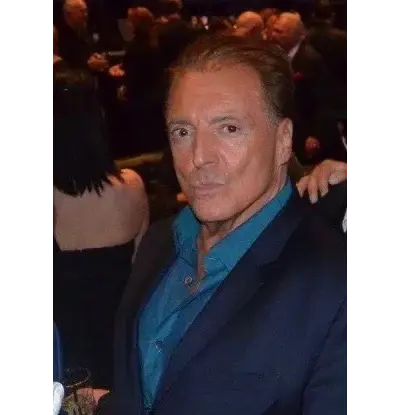
Armand Anthony Assante, Jr. is an American actor. He is perhaps best known for his roles as mobster John Gotti in the 1996 HBO television film Gotti, as Nietzsche in When Nietzsche Wept, and as Mickey Spillane's Mike Hammer in 1982's I, the Jury. His performance in Gotti earned him a Primetime Emmy Award and nominations for the Golden Globe Award and the Screen Actors Guild Award.
