Thomas Hart Benton Quotes
The white race were a land-loving people, and had a right to possess it because they used it according to the intentions of the Creator.
Thomas Hart Benton, 1782-1858, U. S. Senator & U. S. Congressman (Democrat, MO), Speech in the Senate, January 12, 1843
Sourced by: Eigen's Political and Historical Quotations

Most of her modern admirers tend to repress this quotation which is very embarrassing for most modern conservatives. However, there is a minority of thinkers who maintain that land, unused, is open to anyone who will make use of it to improve civilization. Many conservationists, in contrast, extol unused land for preservation.

The line, like many in good poetry, has several levels of meaning. The most obvious is that we had explored and conquered the land, before we became a nation.

Wayne played so many parts depicting whites in the process of expanding Westward that many people saw him as an expert on the history of the Westward Expansion. He did not comment on the whites who then kept huge ranches “selfishly” for themselves or those who selfishly would not share the mineral rich land that they had taken with anyone including the original Indian owners. So in this view, the Indians should have not been capitalists but they should have been socialists and shared their resources.


Jackson refused to obey this decision, He was the only American President who disobeyed a Supreme Court Decision. In doing this, he killed tens of thousands of Indians, allowed the Southern Whites to steal most of the Cherokee land. His Indian Removal, contrary to this Supreme Court decision, was the worst case of ethnic cleansing in the history of the United States.

See {638124} for how this Biblical passage evolved into a concept of property ownership


This statement was quite controversial when it was published and remains so. Many libertarians and private sector enthusiasts see giving this power to government is too much and erodes the sanctity of private property. Nonetheless, most local and state government in America subscribes to this point of view thus allowing zoning, city planning, condemnation of private property for public use and the like. In 1976 when it was promulgated, President Ronald Reagan discussed it in his weekly radio address.


First Published American Indian Author


President-elect Kennedy had asked the poet to write and present a poem for the inaugural.


This is a fascinating quotation in that Cooper was a strong patriot of the American system. Today, this statement would be considered un-American and communistic. The notion that each person had a right to a share of land ownership. America changed in this respect. In Cooper’s day, there was so much land and so few people that it was part of the American concept that each man should have land. (Free men and not slaves of course). But as the population grew, speculators realized that there was opportunity and today in America ALL LAND is owned by people, corporations, other organizations and the government. The population is still growing and the potable water is in shorter and shorter supply. Already, we have to pay for water in much of the country. Perhaps in years to come, someone who argues that each person is entitled to clean air to breathe might be thought of as a radical communist.

This is an important quotations for two reasons. First, one of the white Europan myths in the colonial era was that the Native America had not concept of land ownership and title. This quotation clearly refutes that/ Second, this shows that some Europeans coming to the new world opposed the view that the white Christians and a moral right to the Native American “heathen” land. A few like Williams did not.

Withdrawal meant not allowing certain public land to be sold or allotted to homesteading, commercial development, mining, industrial, ranching, or agricultural use. It was reserved as wilderness areas and/or national parks or forests.
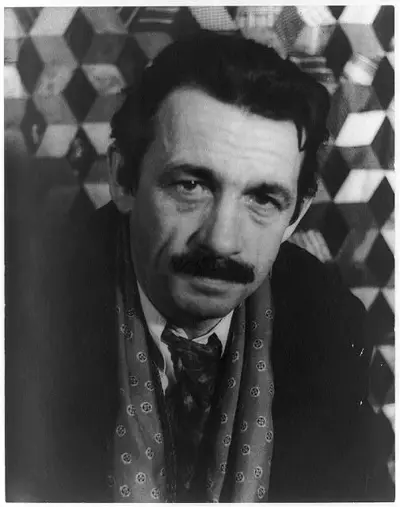
Thomas Hart Benton was an American painter and muralist. Along with Grant Wood and John Steuart Curry, he was at the forefront of the Regionalist art movement. The fluid, sculpted figures in his paintings showed everyday people in scenes of life in the United States. His work is strongly associated with the Midwestern United States, the region in which he was born and which he called home for most of his life. He also studied in Paris, lived in New York City for more than 20 years and painted scores of works there, summered for 50 years on Martha's Vineyard off the New England coast, and also painted scenes of the American South and West.
