Isabelle Eberhardt Quotes
The way I see it, there is no greater spiritual beauty than fanaticism, of a sort so sincere it can only end in martyrdom.
Eberhardt, Isabelle. The Passionate Nomad: The Diary of Isabelle Eberhardt. Translated by Nina de Voogd, Beacon Press, 2001, p. 6.


Jinnah had whipped up his followers to violence so that Muslims were attacking Sikh and Hindu neighborhoods, burning them and murdering many occupants in different parts of India to intimidate the Indian Governmental Ruling Congress Party, The British Colonial Indian officials and the politicians in London to create a Muslim state—Pakistan—with all the territory that they demanded. Many Muslims were in turn killed in retaliatory attacks. The American diplomats and most English politicians tried to persuade Jinnah to compromise on the division of land and resources. Jinnah saw no reason at the time for compromise. However the internecine violence became so brutal and extensive that even Jinnah was shocked. The British would not be intimidated nor would the Indian Congress party and Jinnah was forced to compromise. Even with that, there were over 2 million Indians killed by the time the partition was complete. Jinnah and most other leaders were not willing to die themselves, but they were able to convince enough of their coreligionists to die.

See {583384} for a good example of the political intellectual process of zealots and ideologues.


The dramatic expression was actually not original with bin Laden. It emerged throughout Islamic history regarding the “enemies” of the time.


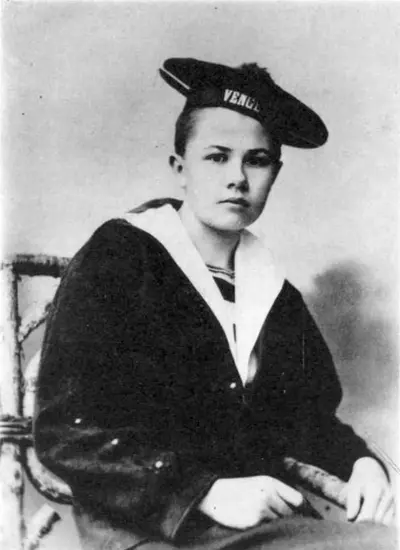
Isabelle Wilhelmine Marie Eberhardt was a Swiss explorer and author. As a teenager, Eberhardt, educated in Switzerland by her father, published short stories under a male pseudonym. She became interested in North Africa, and was considered a proficient writer on the subject despite learning about the region only through correspondence. After an invitation from photographer Louis David, Eberhardt moved to Algeria in May 1897. She dressed as a man and converted to Islam, eventually adopting the name Si Mahmoud Saadi. Eberhardt's unorthodox behaviour made her an outcast among European settlers in Algeria and the French administration.
