Avery Brundage Quotes
The very foundation of the modern Olympic revival will be undermined if individual countries are allowed to restrict participation by reason of class, creed, or race
The following year, there were calls for boycotts of the racist 1936 German views that would prevail at the Olympics to be held in Berlin. So Brundage changed his tune and tried to keep politics out of the Olympics. But race was already injected by German laws and policies and the U. S. practices in the South. Brundage, anti-Semitic himself, was worried that if boycotts of the Berlin Olympics were successful, their might be international or even national boycotts of segregated sporting events in the American south. So he argued to keep politics and boycotts out of the Olympics (See {625799}.) The U. S. Delegate to the International Olympic Committee.
Avery Brundage, *, American Delegate to the International Olympic Committee, Statement responding to reports of the persecution of Jewish athletes in Germany, 1933
Sourced by: Eigen's Political and Historical Quotations

The year before {625800} he had castigated the Germans for discriminating against Jewish and other athletes because of their warped political/ideological views. However, there were so many people in the Olympic movement, that by 1934 there was much advocacy of the boycott of the coming 1936 Berlin Olympics. Brundage who himself was somewhat anti-Semitic had made the earlier statement to try and head off calls for boycott. So in 1934, he changed his approach and argued to keep all “politics” out of the Olympics. However racism transcended politics and much athletics in the American South was segregated so there was some support to keep issues of racism out of the Olympics although it had been introduced in Nazi Germany and the American South in the tryouts and the membership on the Olympic Committees. In 1935 Ernest Lee Jahncke, the American delegate was expelled from the International Olympic Committee (IOC) in July 1936 after taking a strong public stand against the Berlin Games {625798}. Based on this statement The IOC pointedly elected Avery Brundage to fill Jahncke's seat. Jahncke is the only member in the 100-year history of the IOC to be ejected. Brundage beat back the boycott movement and the Olympics went on with American Blacks winning many medals to the distress of the Nazis. However, behind the scenes, Brundage worked to have two Jewish runners removed from the American 400 meter relay team where they were overwhelming favorities so that when America won, Hitler would be spared the embarrassment.


This is a terrific statement of Americanism at any time, but it is particularly notable in 1888. At that time anti-Catholicism and anti-Semitism were both heavy throughout the country. Jim Crowe and racism was rampant, Orientals were heavily discriminated against especially on the West Coast. Irish and Italians were not wanted in most of America except as manual laborers.

This was a very courageous speech for the President to give. Senator Hubert Humphrey had proposed civil rights legislation. At the time most of the racial conservative members of Congress were Democrats and not Republicans as they would become after Civil Rights legislation actually passed in 1964. There was little possibility that the civil rights law would pass as the Southern Democrats could filibuster it in the Senate. None the less Truman supported the legislation and the principle of equal rights despite the fact that he was a Southerner and he knew he would lose the support of the conservative wing of his party.


This was actually a very courageous statement for an American politician running for national office. As a result of the pressure of this statement President Franklin Roosevelt allowed Black enlistment in the Army Air Forces.


He would not allow himself to be buried in a cemetery that would not allow Blacks. He was laid to rest in Shreiner's Cemetery, one of the very few racially integrated cemeteries at the time.


In the 1930s African Americans who traveled were subject to countless humiliations whenever the sought hotels, rooming houses, restaurants and other accommodations. Gas stations would not allow them to use bathrooms and they were reduced to using open fields. Traveling and vacationing was, for Blacks, humiliating. Wikipedia: “Green reviewed hotels and restaurants that did business with African Americans during the time of Jim Crow laws and racial segregation in the United States. He printed 15,000 copies each year. In the 1930s, Green began his work by compiling data on stores in the New York area that accepted black travelers, and published his first guide in 1936. Similar guides had been published for Jewish travelers, who sometimes faced discrimination. Green's guide was so popular that he immediately began to expand its coverage the next year to other US destinations, adding hotel and restaurants as well.”

He was not too far off on religious discrimination, but quite overoptimistic on racial discrimination.


Douglas was appealing to the racist crowd in Galesburg by showing that Lincoln actually believed in Racial Equality. This technique was used be racist politicians—since then and in a few places of the South even into the 21st century.

The issue of slavery which had been suppressed in Congress for the first decades of the nation broke out when Missouri statehood was considered. By previous agreement, slavery was not even discussed in Congress but the time period elapsed. Tallmadge not only proposed that no more slaves could come into Missouri {613176} but most shocking to the Southerners was that every person born in the new state would be free at the age of 25. In a generation, there would be no more slavery in Missouri and there would be no economic compensation for slave owners at all. The House of Representatives accepted the amendment, but it failed in the Senate. At that time, Senators were not elected by voters but were appointed by the state legislators and the Southern slave states had a disproportionate share of the senate from a population point of view. But what this quotation shows clearly that a majority of the country in 1819 were opposed to slavery and were willing to end it without compensation.


The power structure of England and the English administrators of South Africa were strong advocates of racial equality at the beginning of the 19th century. They insisted on equal administration of law. However the Boer white population could think of nothing more absurd. In a sense the Boers were much like the Southern Whites at the same time. The South African government however could not enforce its equality policies in the rural area – the majority of South Africa at the time. When democracy and self rule came to South Africa, the racially moderating force of the English was minimized and the majority of South Africans wanted a racially segregated society. Apartheid resulted.

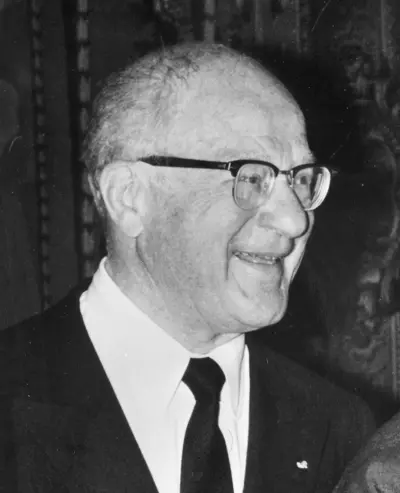
- Born: September 28, 1887
- Died: May 8, 1975
- Nationality: American
- Profession: Civil Engineer
Avery Brundage was the fifth President of the International Olympic Committee, from 1952 to 1972. The only American to attain that position, Brundage is remembered as a zealous advocate of amateurism and for his involvement with the 1936 and 1972 Summer Olympics, both held in Germany.
