Immanuel Kant Quotes
The universal law of justice is: act externally in such a way that the free use of your will is compatible with the freedom of everyone according to a universal law.
Immanuel Kant, 1724-1804, Gerkantman Philosopher, The Metaphysical Elements of Justice
Sourced by: Eigen's Political and Historical Quotations


New York Times columnist Bret Stephens wrote a piece criticizing the rationale behind the forced ouster of Times reporter Donald G. McNeil Jr., but it was never published. Stephens told colleagues the column was killed by publisher A.G. Sulzberger. Since then, the piece has circulated among Times staffers and others — and it was from one of them, not Stephens himself, that The Post obtained and published it.


While this statement and others like it, appear reasonable to most people, in practice most societies impose a different standard. They often do not want the only limitation on freedom to be refraining from impinging on the liberty of others. They often want to impose a morality on the society. Gay marriage is a good example. If a gay couple weds, there is no impingement on the liberty to marry of straight people. None-the-less, many opposed it.

The Cherokee were settled Indians with farms and ranches. These lands were coveted by many whites and many including President Andrew Jackson was trying to get the Cherokee to trade their land for land in the Oklahoma Territory, despite the white promises of the past Ross took the case to the Supreme Court which ruled that the Cherokee land was theirs and it must be protected for them by the government. But President Andrew Jackson, disobeying the Supreme Court Opinion, forced the Cherokee at gun and bayonet point onto the Trail of Tears to Oklahoma, totally reneging on this quotation and deeds and promises of the past.

This political issue has been in contention in every major world power since the Roman Empire. There has always been a division between hard liners and others. At issue is whether the nation should defend and or take up the cause of any national, individual, corporation, ideals even against a foreign country who may object to the behavior or use their own legal system to punish violators of their local laws. Failure to do so, they have argued over the years, makes the power appear weak and will invite further insult and transgressions. They claim that the government’s duty is always to protect its citizens from foreign elements regardless of whether the citizen’s behavior is right or wrong, reasonable or unreasonable, honest or dishonest. Also, this view holds that the nation should NEVER apologize as this makes it seem weak. These people have argued that it is the obverse of “My Country, Right or Wrong” and should be “Our Citizens, Right or Wrong”. On the other side, it is claimed that defending citizens or institutions that are clearly in the wrong not only is morally and ethically improper, but by being so indiscriminate, it weakens the nation’s power and credibility when it later wants to defend its citizens who are in the right and are being railroaded and discriminated against. And an apology, if the individual and institution has been in the wrong or caused harm and damage, is the proper thing to do and will often resolve matters and this is the best outcome often for the erring individual or institution. It is such a universal political issue of contention, that in the 2012 Presidential Campaign Mitt Romney had castigated President Barack Obama for apologizing to the African Nations for forcing their ancestors into American Slavery, even though Romney was very much opposed to slavery. It was the apology that makes America seem weak. The other side is that the apology shows that America has strong democratic principles and occasionally falls short, and when it does so, it acknowledges and corrects it setting a democratic example for all.


This quotation is one of the inscriptions at the Robert F. Kennedy gravesite in Arlington National Cemetery.

Sharansky argued that Democracy had to come to the Arab nations in order to have peace. Buchanan tended to support many who would do Jews harm or had killed many Jews such as Nazi Concentration Camp gueards who were anti-Semitic, but he always claimed not to be anti-Semitic himself.

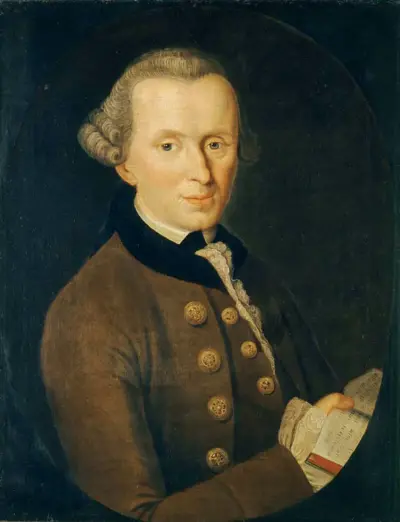
Immanuel Kant was a German philosopher and one of the central Enlightenment thinkers. Kant's comprehensive and systematic works in epistemology, metaphysics, ethics, and aesthetics have made him one of the most influential figures in modern Western philosophy.
