Robert Zubrin Quotes
The United States should give former NSA contractor Edward Snowden immunity from prosecution in exchange for congressional testimony.
Zubrin, Robert. "Give Snowden Immunity." National Review, 2014.


Snowden, was a contract worker for Booz Allan assigned to the National Security Agency (NSA). He felt that some of the NSA activities were illegal and unethical and tried to complain to NSA officials who rebuffed him. Despite the fact that he had signed an agreement not to do so, he copied many critical, classified documents that exposed much of the NSA activities that the NSA officials had denied existed—including lying under oath to the Senate. He then made many of them public, violating his oath, breaking the law, and opening up an entire area of government spying which most Americans knew nothing about and about which senior government officials had lied under oath to Congress. They of course wanted to prosecute Snowden who had told the truth, while they had lied. For many Americans, this became a moral and ethical conundrum.


Edward Snowden, a defense contractor and government employee, publicly revealed that the U. S. intelligence agencies were intercepting and keeping a data base of ALL telephone calls and all Internet e-mails. The government had denied that this was so, and had classified the domestic spying program as Top Secret. Snowden had signed an agreement not to reveal any classified information, and he violated the agreement. Therefore the government was trying to extradite Snowden from Russia at the time so that they could criminally prosecute him. However, there was great debate as to whether the spying on all Americans was legal and Constitutional. Many saw Snowden as a “whistleblower” and pointed out that the government which had lied wanted to prosecute Snowden for telling the truth. Fein, an attorney, was representing Snowden and his family.


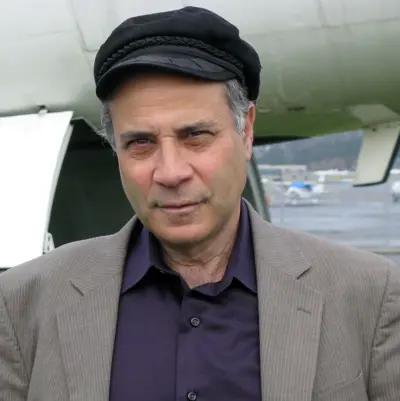
Robert Zubrin is an American aerospace engineer, author, and advocate for human exploration of Mars. He and his colleague at Martin Marietta, David Baker, were the driving force behind Mars Direct, a proposal in a 1990 research paper intended to produce significant reductions in the cost and complexity of such a mission. The key idea was to use the Martian atmosphere to produce oxygen, water, and rocket propellant for the surface stay and return journey. A modified version of the plan was subsequently adopted by NASA as their "design reference mission". He questions the delay and cost-to-benefit ratio of first establishing a base or outpost on an asteroid or another Apollo program-like return to the Moon, as neither would be able to provide all of its own oxygen, water, or energy; these resources are producible on Mars, and he expects people would be there thereafter.
