Scott Ritter Quotes
The UN stopped using Chalabi's information as a basis for conducting inspections once the tenuous nature of his sources and his dubious motivations became clear. Unfortunately, the same cannot be said for the mainstream US media, which give prominent coverage to sources of information that, had they not been related to Hussein's Iraq, would normally be immediately dismissed.
Ritter, Scott. Iraq Confidential: The Untold Story of the Intelligence Conspiracy to Undermine the UN and Overthrow Saddam Hussein. I.B. Tauris, 2005, p. 250.


Ailes suggested plan was not implemented by President Nixon. However. Ailes, an arch conservative who has always believed the media was biased against conservatism, later implemented his idea very successfully. This idea was the intellectual forerunner" to Fox News, which Ailes launched as a "fair and balanced" news network in 1996. The Nixon Administration however, concerned about the extremes of many of his recommendations finally fired him, which turned out to be very positive for Ailes career thereafter.


Until the 20th century almost all American political media were shamelessly and overtly biased—left or right. Political Parties had their own de facto publications much like Fox News became for the Republicans in the 21st century. In the 20th century journalism developed into a profession that evolved standards of objectivity in reporting. That norm then prevailed for about 70 years. With the extreme polarization of the later years of the 29th Century the right wing began to accuse much of the media of a left wing bias, and the media tended to react as Krugman describes in this quotation. The model of having spokespersons for “each side” of an issue works for highly subjective political preferences with a two party system, but where it broke down is with scientific and technical issues. On these, there often really are not two scientific points of view, but there is a scientific consensus of the vast majority of scientists and almost all the prestigious and accomplished scientists are in accord. However, there may be some who have a cultural, religious and/or political concern for some science and its implications for society. They in turn find a scientist or two, often one who is unaccomplished and not recognized in the scientific field to argue a different point of view. The media have tended to equate the two and have a “debate” as if there were two sides to the science when there are not. These issues tend to cluster around scientific medical issues involving sex and birth control methods, environment and conservation, evolution, the age of the earth and the method of creation of the universe. The problem is particularly exacerbated by the general scientific illiteracy of the American population and the relatively few journalists who themselves are scientifically literate who can explain scientific issues well.

Every President in recent times had been distressed with and critical of the press, not no President (or for that matter any senior government official or legislator) has ever used the famous Ibsen phrase enemy of the people or accused the major media outlets of being an enemy of the American citizens or the nation itself--of treason.


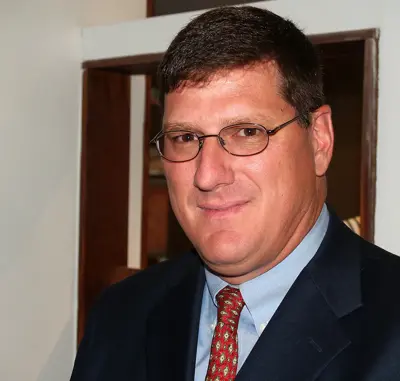
William Scott Ritter Jr. is a former United Nations weapons inspector in Iraq from 1991 to 1998. He later became a critic of United States foreign policy in the Middle East. Prior to the invasion of Iraq in March 2003, Ritter stated that Iraq possessed no significant weapons of mass destruction (WMD) capabilities, becoming according to The New York Times "the loudest and most credible skeptic of the Bush administration’s contention that Hussein was hiding weapons of mass destruction."
