Hassan Nasrallah Quotes
The U.N. Security Council did not to condemn the Qana massacre, due to the U.S. veto.
Noe, Nicholas, ed. Voice of Hezbollah: The Statements of Sayyed Hassan Nasrallah. Translated by Ellen Khouri, Verso, 2007.


His view, that America had no vested interest in Rwanda, was the prevailing thinking of the Republicans who controlled Congress and many of the Democrats as well. President Clinton considered intervention in Rwanda, but decided against it given all the opposition and little time to educate the American public to a different position. The result was the genocide in Rwanda where over 500,000 Tutsis were exterminated by the Hutus. Clinton, several years later not only admitted that he made a political and moral mistake, but officially apologized to Rwandan Tutsis who remained alive. He had intervened very successfully in Kosovo to prevent more murder of ethnic Muslims and was given a hard time politically by his opposition even though the brilliant effort cost no American lives. The United States and the UN, all bearing guilt for doing little in Rwanda, did help to set up the mechanism for the trials of the worst murderers and at least many of the most guilty were brought to justice.


The Secretary General was informed of the North Korean attack on South Korea:

3 years thereafter Saddam was tried by an Iraqi court, found guilty, and hanged.

A little over a decade later, it was the conservative President who was condemning Saddam Hussein for gassing his own people and justified the Iraq War in part over that. And in 2007 Saddam having been toppled from power, he was tried for this crimes against humanity with the major charge being his gassing of the Iraqi Kurds. He was hanged for the “liberal hate speech” which had turned into conservative hate speech, but was a correct accusation regardless of which political pole was making it. There were few issues where most Americans were as unanimous as Saddam’s guilt in the gassing of the Kurds with Limbaugh and Saddam’s relatives being about the only people who saw it as propaganda.

Germany was the major axis power of which Turkey was a partner in WWI. The Germans could easily have stopped the Turks from their genocidal attacks on the Armenians, but they considered it and chose not to. Likewise, the United States and other neutral nations did not make strong initial protests when the attacks started. Turkey was one of the largest empires of the world then and its Ottoman Empire controlled almost all of the Middle East and its oil.
The Christian Armenians, a minority in Turkey and its lands, were discriminated against like other non Muslim minorities in the Ottoman Empire. But during the Turkish War with Russia and WWI, some Armenians defected and served on the Russian side. Many Turkish citizens took revenge on Armenians by means of murder and torture. Soon, the extermination of the Armenians became the official “Young Turk” government policy. Hundreds of thousands of Armenians were killed outright, and about an equal number were “deported” to special areas. Many died of malnutrition along the forced march of Ethnic Cleansing. Others were murdered as they were deported. No one knows exactly how many Armenians were killed with estimates ranging from ½ million to 4 million. This was the first genocide of the 20th century. Modern Turkish leaders however, are in denial about the Armenian deaths. They claim that there was a war and food was scarce; the only Armenians killed, the claimed were proven Russian agents. They further claim that the Armenian behavior was in large part responsible for the forced deportations because of their lack of patriotism and unwillingness to help the Turkish authorities identify the Russian agents. Most Turks today are unaware of the Armenian Genocide as nothing is taught about the massacres in schools or other institutions. It is against the law in Turkey to even have an intellectual study of the Turkish behavior towards the Armenians, much less publish anything about it.


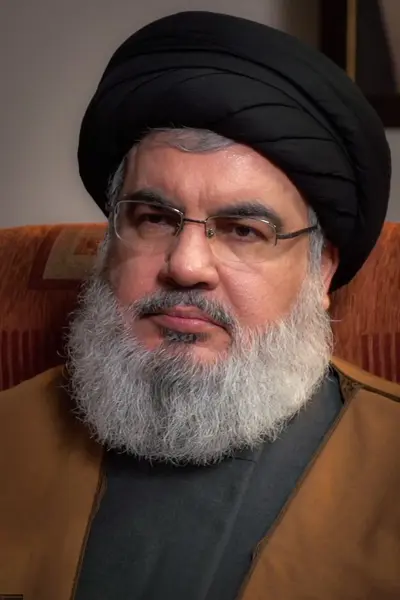
Hassan Nasrallah is a Lebanese cleric and political leader who serves as the 3rd secretary-general of Hezbollah since his predecessor, Abbas al-Musawi, was assassinated by the Israel Defense Forces in February 1992.
