Irshad Manji Quotes
The trouble with Islam is that lives are small and lies are big.
Irshad Manji, Canadian Moslem Reformer, The Trouble With Islam, 2003
Sourced by: Eigen's Political and Historical Quotations


Son of Reverend Billy Graham. The statement was made in the aftermath of September 11.


In September of 2005 a Danish Newspaper published some political cartoons showing the hypocrisy of some Muslims who use Islam to justify murder of innocents and terrorism. Many in the Middle East protested vehemently because the Prophet Muhammad's visage was depicted against Islamic tradition. Many Muslim leaders claimed that insulting religion was an “abuse” of freedom of speech including those from nations which regularly publish material that is virulent against Christians and Jews. Momani reprinted the cartoons and wrote this editorial arguing that the cartoons insulted Islam far less than the terrorism and murder—especially a recent murder of Muslims in Amman attending an Islamic wedding ceremony, He was fired by the newspaper owners and then actually arrested by the Jordanian authorities for “Insulting Religion.”
She was originally Egyptian but because of her criticism, her citizenship was actually revoked.

Just days before September 11. While in America, such a remark would just be considered an insensitive and inappropriate utterance, in France, he was brought before the courts and threatened with jail and a large monetary fine under a 1972 French law which bans hate speech. See {595311}

These kinds of inflammatory sermons are delivered with the approval of the king and royal family who crack down on any cleric who preaches what they do not approve of.

A publicity seeking fundamentalist Christian minister in Florida had publicly burned a Koran to the moral condemnation of the President and most other government leaders, as well as clergy of all faiths. However, after the President of Afghanistan condemned the act, there were attacks on a United Nations compound in that country and a number of innocent people were killed and two beheaded. Yet most Muslim clerics were reluctant to morally condemn the murders while they were vociferous in castigating the Koran burning. Some were intimidated and feared that they would be attacked if they criticized the Islamic fundamentalism that advocated the murders and terrorism.
Toleration is a relative term. The Muslim Moors made Christians (and Jews) pay a special tax. At times they were forced to wear special clothing so that they could be readily identified. And they could not build churches larger or taller than the smallest mosque in the community. At times, their occupations were restricted but at other times Christians and Jews were appointed to the highest positions like Vizier. The Inquisition, in contrast, forced all Muslims (and Jews) to leave the country without any of their property or money or be tortured and killed—usually by burning at the stake unless of course that they converted to Christianity.
The amazing thing about this quotation of 1913 is that at the end of the 20th century the Christians were again at the Muslims throats and Bosnian Muslims were being murdered and ethnically cleansed by the Roman Catholics of Croatia and the Eastern Orthodox Christians of Serbia. The hatred had persisted—the legacy of 1000 years before.
After years of minority Sunni Muslim rule of Iraq, the U. S. invasion gave the majority Shiite Muslims political control. The Sunnis and Shiites have been at each others throats for centuries despite the fact that they are both Muslims. Saudi Arabia is the center of Sunni Islam and many of its religious extremists issue edicts advocating the suicide bombing of Shiite mosques and other facilities and assuring martyrdom for the suicide bombers.


Odo of Chatillon-Sur-Marne. This is an amazingly distressing quotation for most moderns. Here we have the Pope preaching genocide and ethnic cleansing. This was one of the main triggers of the bloody Crusades and is not forgotten by Muslims in the Middle East Today. As Islam has not changed a great deal in 1000 years, most Muslims assume that the same is true of Christianity and especially the popes and the Roman Catholic Church. This is one of the reasons that the Islamic world reacts so strongly when a pope makes any statement negatve about Muslims and Islam.

The Alawites, always a Muslim minority in Syria, have been hated, distrusted, discriminated against, and physically persecuted by the majority Sunni Muslims as long as they have existed. When in Syria, the Alawites, although a minority, gained political control of the country and for the first time were secure in their own country. In the early 2000s, the Sunni majority tried to oust the Alawite leadership, but the Assad government put down the protests brutally. Most Western observers did not know of the anti-Alawite history of persecution in Syria. Returning to that position of victimization was so feared by the Alawites that they fought tooth and nail, murdering many civilians, to be sure that the historical position of the Alawites would not occur again. This makes talks and negotiations over the Syrian Civil War so difficult. The Alawites believe that if they do not control the nation, they will be massacred by the majority. The Christians and the Jews also believe that if the Sunni’s get control, their communities will be in great danger. Complicating the situation even further, is that fact that of the insurgent Sunni groups, the tolerant secular ones who started the revolution are no longer in control of the insurgents. De facto dominance has passed to the Jihadist, Islamic extremists who hold the view expressed by this quotation.


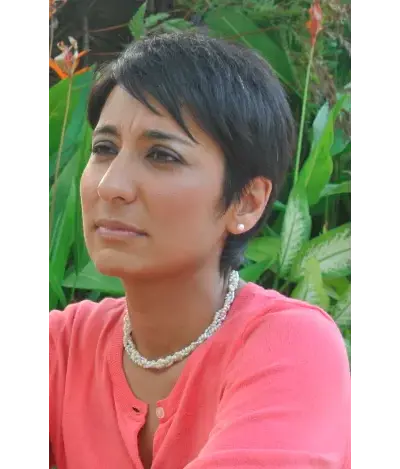
Irshad Manji (born 1968) is a Ugandan-born Canadian educator. She is the author of The Trouble with Islam Today (2004) and Allah, Liberty and Love (2011), both of which have been banned in several Muslim countries. She also produced a PBS documentary in the America at a Crossroads series, titled Faith Without Fear, which was nominated for an Emmy Award in 2008. A former journalist and television presenter, Manji is an advocate of a reformist interpretation of Islam and a critic of literalist interpretations of the Qur'an.
