Adlai Stevenson I Quotes
The tragedy of our day is the climate of fear in which we live, and fear breeds repression. Too often sinister threats to the bill of rights, to freedom of the mind, are concealed under the patriotic cloak, of anti-communism.
Stevenson, Adlai E. "Address to the American Legion Convention." 27 Aug. 1952. Major Campaign Speeches of Adlai E. Stevenson, 1952, Random House, 1953, p. 26.

What oven gets overlooked in the history leading up to the Civil War was the terribly repressive atmosphere that developed in the South itself over the issue of slavery. There were some abolitionists in the South, and most of the slaves were held by a relatively few wealthy men. Many with no slaves or only one or two, might go either way on the slavery issue and the various fugitive slave laws. And Northern abolitionists sometimes would come South to investigate and report on the conditions of the slaves of the South. While still in the Union, many Southern areas made a mockery of the Constitutional protections of freedom of speech, freedom of the press. Censorship and repressive activities invaded privacy, and the South, for both Northerners and English travelers, no longer had the charm of the past. Note the use of the term “reign of terror”. Bunch was a seasoned diplomat experienced at reporting on conditions.


This is a typical statement of human rights policy by many countries. Essentially, some controlling authority states that rights are guaranteed except when it is “dangerous” or contrary to the country’s “best interest”. Of course then anything the authorities want to censor is classified so that it is an exception. To be a right, it must be guaranteed even when hateful, insulting and/or dangerous.


This quotation is a great demonstration of how much wiser and the better politician of all the crowned heads of Europe that Queen Victoria was. There were stirrings of freedom and desire for parliamentary government throughout Europe. Queen Victoria, even though and perhaps because she was a young woman, had a great feel for fairness and reasonableness and had read a great deal of history. There were some radical red socialists calling for complete radical revolution scaring European Royalty profoundly. They reacted very conservatively and with reaction, reverting to more tyrannical practices of the past urged in that path by very conservative, right wing advisors. Victoria also had little respect for some of the monarchs who had little interest in their people and much with their personal power and wealth. In the end, it was England which was the only nation which never had a serious radical socialist / communist threat, and that had much to do with Victoria’s political acumen and wisdom.
CAIR is The Council on American-Islamic Relations.

In early America, the political parties had their own newspapers where “truth” was not an important journalistic virtue. Red scares and other fears of foreign conspiracies are as old as our nation. In 1798 the Federalists accused Vice President Thomas Jefferson, among others, of being in contact with the foreign conspirators and printed details of a "manufactured" plot to massacre the citizens of Philadelphia in one of their controlled newspapers. The nation was so alarmed that the infamous Alien and Sedition Acts were passed by Congress a few months later. These were probably the greatest infringements on American civil liberties in our history.


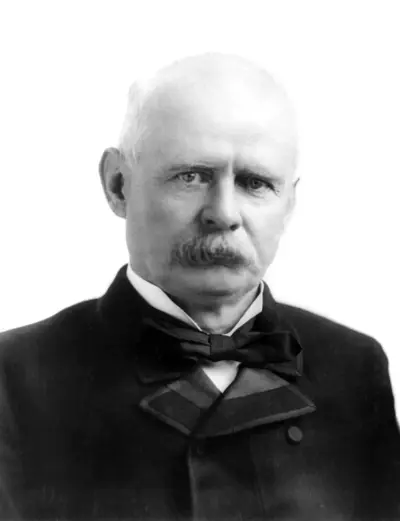
Adlai Ewing Stevenson served as the 23rd vice president of the United States from 1893 to 1897. Previously, he served as a representative from Illinois in the late 1870s and early 1880s. After his subsequent appointment as assistant postmaster general of the United States during Grover Cleveland's first administration (1885–1889), he fired many Republican postal workers and replaced them with Southern Democrats. This earned him the enmity of the Republican-controlled Congress, but made him a favorite as Grover Cleveland's running mate in 1892, and he duly became vice president of the United States.
