Edwin Lawrence Godkin Quotes
The three things a Tammany leader most dreaded were in the ascending order of repulsiveness, the penitentiary, honest industry, and biography
Tammany Hall was the political machine that controlled New York City in the first half of the 20th century.
Edwin Lawrence Godkin, 1831-1902, Editor, New York Evening Post, Founder, The Nation, Quoted in Norman Thomas & Paul Blanchard, What’s The Matter with New York
Sourced by: Eigen's Political and Historical Quotations


The Bank of the United States would be


As a candidate for the Republican Presidential Nomination, Trump was very forthright about the fact that when he was a business tycoon, he gave money to many politicians not for any ideological reasons but he considered the money an investment which paid off handsomely. Almost all large campaign donors believe that they are making an investment and most have continued to be satisfied with the results so they continue to donate. See {583282} as an example of Trump's candid view.


Editorializing on Daniel D. Rostenkowski, U. S. Congressman (Democrat, IL) and Chairman of the House Ways and Means Committee:


In the early 1920's the New York City Board of Alderman was totally dominated by Irish-Americans. One advised a non-Irish colleague:


Tammany Hall was the name given to the New York City Democratic political machine. While it was, by modern standards, quite corrupt, the main source of its power was what it delivered to the general mass of New York City citizens. And Tammany Hall was unsurpassed in its delivery of public works to the city. Bridges, subways, parks, and other amenities were conceived of, financed and built by government. Although each of these projects had funds skimmed by the politicians, the projects were constructed to an extent and scale that was previously unknown in politics. In that sense, Tammany Hall was one of the major early instances of the liberal notion of government development of urban areas.
Roosevelt’s first gubernatorial term was shaken by the Stock Market Crash and the Failure of the Banks 1929 and the passivity of the Herbert Hoover administration in Washington in coping with the economy and the Great Depression. Reform of Tammany Hall and other State problems took a back seat to trying to create jobs and stabilize the state economy. The Republican candidate Tuttle could not argue against FDR’s economic policies as he would then have to defend President Hoover who was becoming exceedingly unpopular. So he went after the corruption of the Tammany Hall Machine and Roosevelt’s relative passivity. The voters were ok with FDR’s priorities.


George Barnsedale Cox, 1853–1916, was the corrupt, Republican, political boss of Cincinnati where he amassed a fortune of millions of dollars—hundreds of millions in today’s money—as a city party official in the early 1900s.

San Francisco Machine Boss Abraham At that time, there were very few jurisdictions with primary elections. Most, like California, selected the party candidates at party conventions. At the time the Railroads had bribed or employed enough delegates to the Party Convention to veto any candidate they did not like. And Pardee was in their sights as he was a supporter of the Theodore Roosevelt concept of preservation of public lands. That meant less land for the Railroads to obtain, develop, build a railroad line and station in the area and then sell the land in smaller parcels at a huge profit.


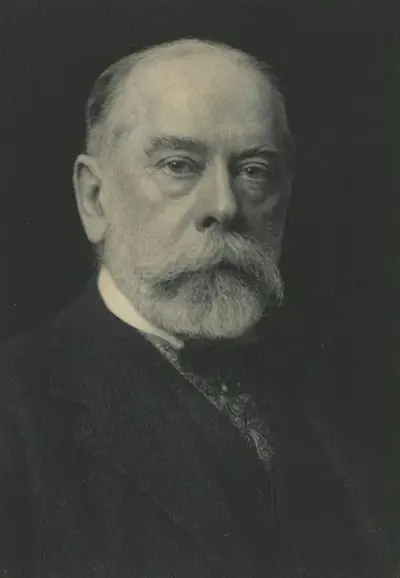
Edwin Lawrence Godkin was an Irish-born American journalist and newspaper editor. He founded The Nation and was the editor-in-chief of the New York Evening Post from 1883 to 1899.
