William Graham Sumner Quotes
The taxing power is especially something after which the reformer's finger always itches.
Sumner, William Graham. What Social Classes Owe to Each Other. Harper & Brothers, 1883, p. 122.


This is opposite to the view that the power to tax is the power to destroy. See Oliver Wendell Holmes {603715}, Daniel Webster {37299} and John Marshall {320000}.

Sherman was a member of the House Finance Committee that would have to initiate any tax bill. Most of the Republicans of that time had signed a pledge to have no new taxes and that was interpreted as no closing of tax loopholes. So they blocked all attempts at closing tax loopholes when they controlled the house or had a filibuster minority of the Senate. However in the few years that they did not, the Democrats had “more important” legislation like health care reform that they wanted to use their majority position for. The result was no closure of tax loopholes—even the egregious ones that a majority of Congress wanted closed and almost all the people did. The particular Congress when Sherman made this statement was the worst Congress in American History in terms of the few laws that the polarized Congress could pass.
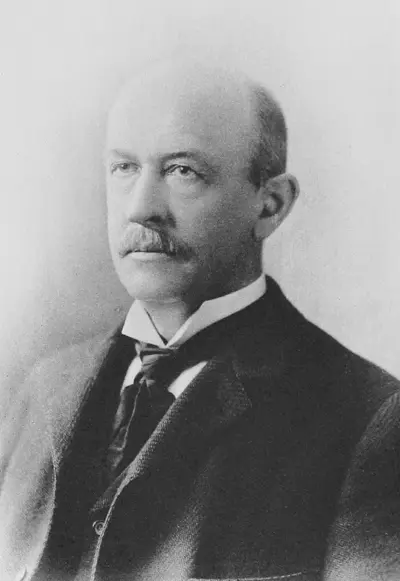
William Graham Sumner was a classical liberal American social scientist. He taught social sciences at Yale, where he held the nation's first professorship in sociology. He was one of the most influential teachers at Yale or any other major school. Sumner wrote widely within the social sciences, with numerous books and essays on American history, economic history, political theory, sociology, and anthropology. He supported laissez-faire economics, free markets, and the gold standard. He adopted the term "ethnocentrism" to identify the roots of imperialism, which he strongly opposed, and as a spokesman against it he was in favor of the "forgotten man" of the middle class, a term he coined. He had a long-term influence on conservatism in the United States.
