Charles de Gaulle Quotes
The sword is the axis of the world and its power is absolute.
de Gaulle, Charles. Le Fil de l'épée. Berger-Levrault, 1932, p. 9.

William the Conqueror. The King had come ashore and fell forward in the sand on his face and hands. Showing a sense of humor, he hade this statement. Shortly thereafter he took England militarily at Hastings and seized it politically.


This was written under the name of Ragnar Redbeard. There are a few scholars who believe that it was written by Jack London, but most credit Desmond.

Xerxes was as the Texans say, “All hat and no cattle.” He had delusions of grandeur and was quite unsuccessful as a conqueror.


This was a prevailing philosophical view in England and other monarchies. American Founding Fathers were quite familiar with Hobbes’ works and views and many specifically rejected it. Some of the Federalists wanted to extend some of the traditional prerogatives of monarchy to the American Presidency while the Jeffersonian Republican Democrats wanted the executive treated like any, one else before the law. Today that view generally holds, but there is a vestige of the Hobbes’ view still present in things like Executive Privilege.


Mytilene was at war with Athens. Pittacus suggested that instead of the armies fighting, the war should be decided by a battle between him and the Athenian General who accepted. Pittacus won and was the Ruler of Athens, where he became quite popular. He wrote all his laws and decrees in poetry. He resigned after 10 years. He was considered one of the 7 great Greek Sages.


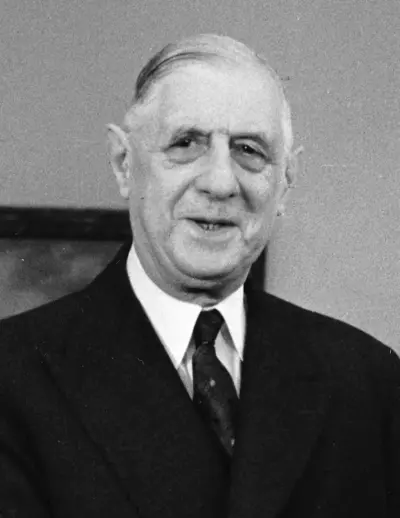
Charles André Joseph Marie de Gaulle was a French army officer and statesman who led Free France against Nazi Germany in World War II and chaired the Provisional Government of the French Republic from 1944 to 1946 in order to reestablish democracy in France. In 1958, he came out of retirement when appointed President of the Council of Ministers (Prime Minister) by President René Coty. He rewrote the Constitution of France and founded the Fifth Republic after approval by referendum. He was elected President of France later that year, a position to which he was reelected in 1965 and held until his resignation in 1969.
