Vitruvius Quotes
The stone in quarries is found to be of different and unlike qualities. In some it is soft, in others it is medium, in still others it is hard as in lava quarries. There are also numerous other kinds: for instance, in Campania, red and black tufas; in Umbria, Picenum, and Venetia, white tufa which can be cut with a toothed saw like wood.
Vitruvius. The Ten Books on Architecture. Translated by Morris Hicky Morgan, Harvard University Press, 1914, p. 49.


Under questioning from Rep. Brandon Gill (R., Texas) in a House Oversight Committee hearing, March 26, 2025, Maher denied reading the referenced book or that she believed what she tweeted.

From a phone interview conducted by the article author.


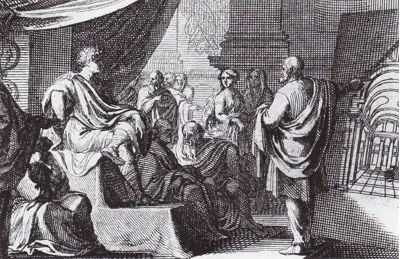
Marcus Vitruvius Pollio (/vɪˈtruːviəs ˈpɒlioʊ/; c. 80–70 BC – after c. 15 BC), commonly known as Vitruvius, was a Roman author, architect, and civil and military engineer during the 1st century BC, known for his multi-volume work entitled De architectura. He originated the idea that all buildings should have three attributes: firmitas, utilitas, and venustas ("strength", "utility", and "beauty"). These principles were later widely adopted in Roman architecture. His discussion of perfect proportion in architecture and the human body led to the famous Renaissance drawing of the Vitruvian Man by Leonardo da Vinci.
