Henry Adams Quotes
The Secretary of State has always stood as much alone as the historian. Required to look far ahead and around him, he measures forces unknown to party managers, and has found Congress more or less hostile since Congress first sat.
Henry Adams, 1838-1918, Politician, Historian & Writer, 1906
Sourced by: Eigen's Political and Historical Quotations


Periodically in American history, there has been a struggle between the Executive Branch and the Senate for dominance. The Senate’s power is negative however. It can block things, but cannot directly make them happen. The President can do both.


He and his Prime Minister, John Majors, had become so unpopular, that they were forced to resign by their own Conservative Party and never had to be voted out of office.


From this quotation, {624648} and {615901} it is clear that the framers of the Constitution intended the treaty making powers to be shared by the President and the Senate. In practice, in modern times treaties are usually initially negotiated by diplomats under the supervision of the President and the Senate gets to concur or not in the ratification process. However, there have been a number of treaty failures including the League of Nations where the lack of coordination has resulted in a situation where the Senate had to accept or reject something which the President had negotiated and the Senate rejected the treaty.


to send troops to Cuba The problem in Cuba was not even a crisis for America. But the precedent became the beginning of a huge change in the balance of power between the President and Congress. Together with his huge popularity, Roosevelt could do almost anything and have public support, but the war powers—the authority to send American troops into harm’s way—started their profound shift from requiring the President to ask Congress to declare war and the President acting unilaterally which had become common by the 21st century.
Although Hamilton was an advocate of a strong Federal Government, he always advocated checks and balances. Here, he called for checks on the President in the area of foreign affairs which he thought was lacking in the draft of our original constitution. His concern was not addressed and the President still has almost unilateral control over American foreign policy. The only checks are the Senate with the power to ratify treaties or not, and the Congress which need not appropriate money for purposes that the President thinks important, and can condition the money that they do appropriate upon certain limitations on the President’s preferred policies.


Indeed, the control is only one the medium term when after 4 years a President can be replaced by the voters. But a number of President’s have embarked upon foreign policies that was opposed by the majority of the population.


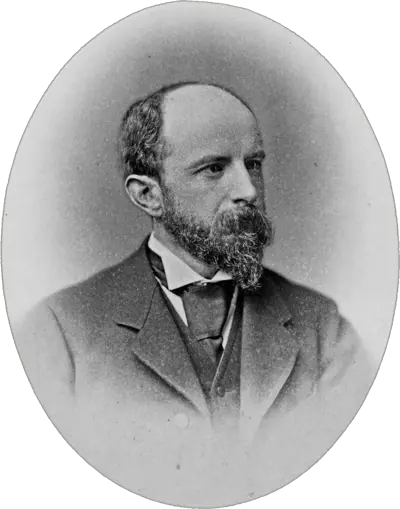
Henry Brooks Adams was an American historian and a member of the Adams political family, descended from two U.S. Presidents.
