Reinhold Niebuhr Quotes
The scientific observer of the realm of nature is in a sense naturally and inevitably disinterested. At least, nothing in the natural scene can arouse his bias. Furthermore, he stands completely outside of the natural so that his mind, whatever his limitations, approximates pure mind. The observer of the realm of history cannot be disinterested in the same way, for two reasons: first, he must look at history from some locus in history; secondly, he is to a certain degree engaged in its ideological conflicts.
Niebuhr, Reinhold. Faith and History: A Comparison of Christian and Modern Views of History. Charles Scribner's Sons, 1949, p. 116.


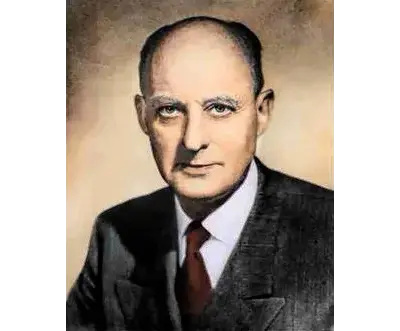
Karl Paul Reinhold Niebuhr (1892–1971) was an American Reformed theologian, ethicist, commentator on politics and public affairs, and professor at Union Theological Seminary for more than 30 years. Niebuhr was one of America's leading public intellectuals for several decades of the 20th century and received the Presidential Medal of Freedom in 1964. A public theologian, he wrote and spoke frequently about the intersection of religion, politics, and public policy, with his most influential books including Moral Man and Immoral Society and The Nature and Destiny of Man. The latter is ranked number 18 of the top 100 non-fiction books of the twentieth century by Modern Library. Andrew Bacevich labelled Niebuhr's book The Irony of American History "the most important book ever written on U.S. foreign policy." The historian Arthur Schlesinger Jr. described Niebuhr as "the most influential American theologian of the 20th century" and Time posthumously called Niebuhr "the greatest Protestant theologian in America since Jonathan Edwards."
