Plutarch Quotes
The saying of old Antigonus, who when he was to fight at Andros, and one told him, "The enemy's ships are more than ours," replied, "For how many then wilt thou reckon me?
Plutarch. Plutarch's Lives. Translated by Bernadotte Perrin, vol. 5, Harvard University Press, 1917, p. 345.


He was objecting to the current crop of senior military officer who have little experience in fighting and much in academic, strategic and technical training. Many however see him as a dinosaur who does not realized the complex nature of the modern military missions. In general, we have won almost all of our fighting battles but often failed in our maintaining civil society, occupation, nation building, military procurement, preventing sexual assault of our own troops by our own soldiers, assuring mental health of our soldiers. Hackworth, detractors argue, wants to change what already works and ignore what does not.

He polished the army but had little strategic appreciation for the strengths of the Union, its industrial capability, logistical capability, and its greater manpower pool. He was reluctant to fight, and when he did, was happy to take territory, that meant little, when Lincoln and other strategists argued that the object should be to destroy and degrade the Confederate Army and the Confederate capacity to support the Army and continue to make war.
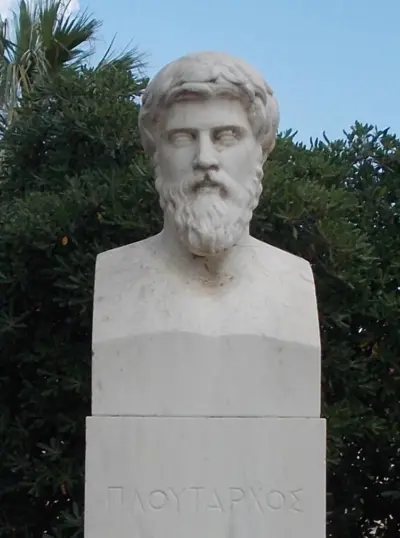
Plutarch (/ˈpluːtɑːrk/; Greek: Πλούταρχος, Ploútarchos; Koine Greek: [ˈplutarkʰos]; AD 46–after AD 119) was a Greek Middle Platonist philosopher, historian, biographer, essayist, and priest at the Temple of Apollo. He is known primarily for his Parallel Lives, a series of biographies of illustrious Greeks and Romans, and Moralia, a collection of essays and speeches. Upon becoming a Roman citizen, he was named Lucius Mestrius Plutarchus (Λούκιος Μέστριος Πλούταρχος).
