Boris Yeltsin Quotes
... the refusal of the military to become involved in the reforms, their allergy to anything new, their contempt for human dignity, their arrogance and self-satisfaction, their favoritism, personal whims, elitism.
Boris Yeltsin, 1931-2007, Mayor, Moscow (Russia), President, Russian Republic, Quoted in Pravda, June 18, 1987
Sourced by: Eigen's Political and Historical Quotations


In Australia, the Liberal Party is a right wing conservative party, unlike England or the United States.


This is the ultimate extreme of conservatism which literally means to conserve what is. Salisbury argues that even if you truly believe that the status quo is bad, you should keep it as the risk of change and unexpected consequence is so great that it is not worth the risk. Interestingly, this is the same mode of thinking which created the command in the Koran for Muslims to live with a terrible Caliph or ruler (unless he is a blasphemer or heretic) rather than risk the instability of regime change. See {590195} and {593076} as examples.

Although very authoritarian in his governing style, the substance of the Constitution that and basic laws that he imposed on post war Japan were extremely left wing. Japan eschewed having a military, required total equality of women for the first time in Japanese history. The Civil Service was given great power and authority over business, there was a complete social safety net. MacArthur would not take kindly to this characterization as he thought of himself as a lifelong conservative and was the darling of the American right wing extremists. He took the American Constitution literally and was determined to turn ultra-militaristic Japan into a democracy. He did in one of the most dramatic cultural and governmental changes in history.


Sowell’s definition of “degeneracy” seems to be departing from his ideal version of proper views and action.

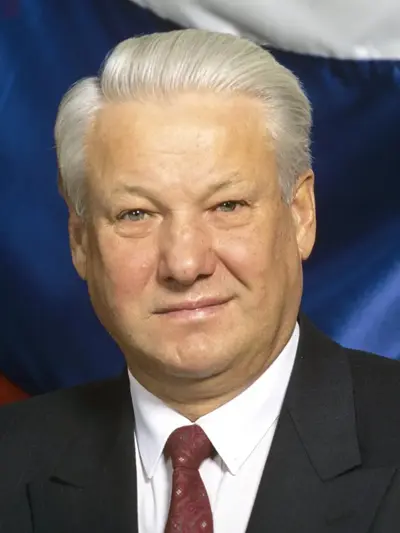
Boris Nikolayevich Yeltsin was a Russian and former Soviet politician who served as the first President of Russia from 1991 to 1999. A member of the Communist Party of the Soviet Union from 1961 to 1990, he later stood as a political independent, during which time he was viewed as being ideologically aligned with conservatism and Russian nationalism.
