Jack Abramoff Quotes
The reason there are tens of thousands of lobbyists is because the ever-expanding federal government creates ever-increasing opportunities for abuse. The more the federal government does, the more lobbyists there will be to protect special interests at the expense of the common interest.
Abramoff, Jack. Capitol Punishment: The Hard Truth About Washington Corruption from America's Most Notorious Lobbyist. WND Books, 2011, p. 254.


The WWI veterans lobby was formed and they pressured Congress into authorizing a bonus of between $1 and $1.25 for each day of wartime service. However, the catch was that they would not be paid until 1945 unless they did, Hence the name for the bonus. The Bonus March on Washington would eventually march on Washington to get their pay while they were still alive. Finally, the bonuses were paid immediately after Franklin Delano Roosevelt assumed the Presidency even though he personally opposed paying it early. Congress passed the law over his veto.

The bills that Congress tends to pass provide benefits for very few but spread the costs over many of not the whole population. In the majority of concentrated benefits, the beneficiaries have made large campaign donations and/or have retained powerful lobbyists. They are special interests in the truest sense of the word. See {633225} for a good example of this principle.


The commercial special interests, together with the banks had become a very dominant force in society just as before the Great Depression in 1929 and the Great Recession in 2008.


He made this quotation when he was a member of the Wisconsin State legislator. He was describing the influence and interaction that corporations had with the Wisconsin state legislative process.

Mises is one of the very few economic conservatives who opposed companies getting involved with lobbying or politics in any way. He, like some others, saw the negative public effect that business produces when it does get deeply involved in politics, but he uniquely observed that the businesses themselves suffered as a result of the involvement in politics. Obviously very few business leaders of the 21st century agreed with Mises’ earlier views.


His unusual theory was that if government could or did not do much to affect the economy, there would be no reason for a large corporation to invest money in electing a particular party or candidate. Therefore the way to get the influence of big money out of politics is to reduce the role of government drastically. Paul was one of the very few Conservative politicians who would publicly state that the reasons that corporations made campaign contributions was to buy political favors, favorable legislation or tax treatment. If corporate investments did not pay off for the company, shareholders would not tolerate spending investment money for a particular political philosophy as most companies have shareholders representing the range of American political opinion and their investments should pay off to the bottom line—profits.

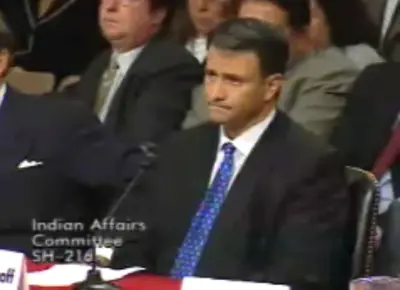
Jack Allan Abramoff is an American lobbyist, businessman, movie producer, writer, and convicted felon. He was at the center of an extensive corruption investigation led by Earl Devaney that resulted in his conviction and to 21 people either pleading guilty or being found guilty, including White House officials J. Steven Griles and David Safavian, U.S. Representative Bob Ney, and nine other lobbyists and congressional aides.
