Joseph Story Quotes
The real object of the First Amendment was not to countenance, much less advance Mohammedanism, or Judaism or infidelity, by prostrating Christianity; but ... to prevent any national ecclesiastical establishment which should give to a hierarchy the exclusive patronage of the national government.
Story, Joseph. Commentaries on the Constitution of the United States. Vol. 3, Hilliard, Gray, and Company, 1833, p. 728.


This is a critical quotation on the government establishment of religion issue. There are a few people who have argued over the years that the Founding Fathers and their culture was religious and where they were careful to avoid favoring one religion over another, they did NOT intend to put atheism on the same equal plane as religion as far as government action is concerned. However, some of the Founding Fathers were atheists, and some others like John Adams were deists—they believed in a God but not in the Trinity or in Judaism or any organized religion. So this quotation makes it clear that the First Amendment does NOT favor religion over non religion or secularism. Atheism must be on an equal footing but not on a higher plane.


This publication was one of the best selling in the entire history of America. Rarely has a single publication been read by as high a proportion of a population. Those who support the maintenance of a strict separation of Church and State in America often point to this quotation and the popularity of Common Sense as evidence that not only were the founding fathers in favor of strict separation but so was the general Colonial American public.

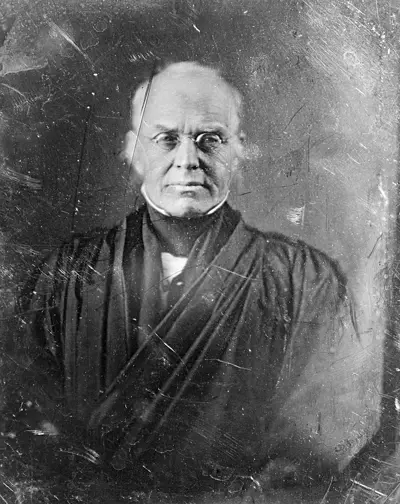
Joseph Story was an American lawyer and jurist who served on the Supreme Court of the United States from 1812 to 1845, during the Marshall Court and early-Taney Court eras. He is most remembered for his opinions in Martin v. Hunter's Lessee and The Amistad case, and especially for his magisterial Commentaries on the Constitution of the United States, first published in 1833. Dominating the field in the 19th century, this work is a cornerstone of early American jurisprudence. It is the second comprehensive treatise on the provisions of the U.S. Constitution and remains a critical source of historical information about the forming of the American republic and the early struggles to define its law.
