Aristotle Quotes
The real difference between democracy and oligarchy is poverty and wealth. Wherever men rule by reason of their wealth, whether they be few or many, that is an oligarchy, and where the poor rule, that is a democracy.
Aristotle. Aristotle's Politics. Translated by Benjamin Jowett, Clarendon Press, 1905, p. 115.


Worry about the disproportional power of the rich is not a modern concern, but was a concern from the very beginning of the nation. There was a belief that if there were a legislative body representing the entire population the rich would tend to dominate it. The solution that England had found was a bicameral Parliament—a House of Lords representing the wealthy and the powerful and the House of Commons, representing the bulk of the people. America followed suit but never did have the class distinction of England.

Buffet was the 2nd richest man in America and had been the beneficiary of the George W. Bush tax cuts for the wealthy and had profited from a strong economy but one which found middle class workers actually earning less each year.

Chesterton preceded by almost half a century much of the intellectual dispute of the War on Poverty of the 1960’s where much of the middle and upper class tried to change a variety of behavior patterns and customs and values of the poor.


The “competition of the poor included the political and social activism competition.”


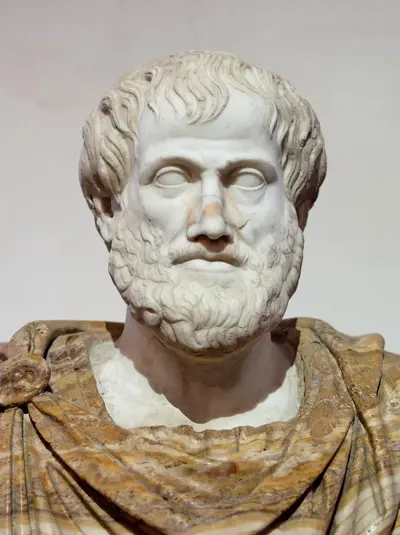
Aristotle (/ærɪˈstɒtəl/; Greek: Ἀριστοτέλης Aristotélēs, pronounced [aristotélɛːs]; 384–322 BC) was a Greek philosopher and polymath during the Classical period in Ancient Greece. Taught by Plato, he was the founder of the Lyceum, the Peripatetic school of philosophy, and the Aristotelian tradition. His writings cover many subjects including physics, biology, zoology, metaphysics, logic, ethics, aesthetics, poetry, theatre, music, rhetoric, psychology, linguistics, economics, politics, meteorology, geology and government. Aristotle provided a complex synthesis of the various philosophies existing prior to him. It was above all from his teachings that the West inherited its intellectual lexicon, as well as problems and methods of inquiry. As a result, his philosophy has exerted a unique influence on almost every form of knowledge in the West and it continues to be a subject of contemporary philosophical discussion.
