Edmund Burke Quotes
The question with me is, not whether you have a right to render your people miserable, but whether it is not your interest to make them happy. It is not what a lawyer tells me I may do, but what humanity, reason, and justice tell me I ought to do. Is a politic act the worse for being a generous one? Is no concession proper but that which is made from your want of right to keep what you grant?
Edmund Burke, 1729-1797, Irish Orator & Member of the British Parliament, Speech on Conciliation
Sourced by: Eigen's Political and Historical Quotations


Perhaps this is one of the reasons American society is so litigious.


Note that the two do NOT ALWAYS coincide. There are those who argue that law should be respected, right or wrong. There are also those who argue that law should be respected, only when it is in the right. Note also that “respect” and “obedience” are two different things. Some people argue that law and the courts and government must have respect. Others that they are only due obedience but not necessarily respect when they are in the wrong. Still others, like Thoreau, that obedience even is not required when the law is wrong. There are those who take this to the degree that obedience to a “wrong” law is wrong and there is a DUTY to disobey a wrong law. However, a more nuanced view does not treat all laws as the same importance. I may think a particular tax is unjust and wrong, but obedience does not necessarily have moral consequences. A law that says that people with a certain religion must not be hired, however, is sufficiently immoral that I am obliged to disobey it.


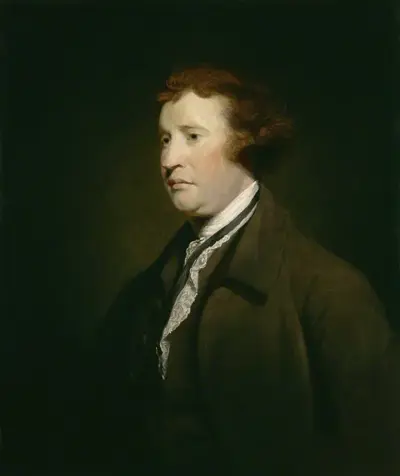
Edmund Burke was an Irish statesman, economist, and philosopher. Born in Dublin, Burke served as a member of parliament (MP) between 1766 and 1794 in the House of Commons of Great Britain with the Whig Party after moving to London in 1750.
