Jean-Jacques Burlamaqui Quotes
The principal end a prince was made for is to take care, that every one should have his rights. This ought to engage him to study not only the science of those great civilians, who ascend to the first principles of law, which regulate human society, and are the basis as it were of government and politics; but also that part of the law, which descends to the affairs of particular persons. This branch is generally left for the gentlemen of the long robe, and not admitted into the education of princes, though they are every day to pass judgment upon the fortunes, liberties, lives, honor, and reputation of their subjects. Princes are continually talked to of valour and liberality; but if justice do not regulate these two qualities, they degenerate into the most odious vices. Without justice valour does nothing but destroy; and liberality is only a foolish profuseness. Justice keeps all in order, and contains within bounds him, who distributes it, as well as those, to whom it is distributed.
Jean-Jacques Burlamaqui, 1694–1750, Swiss Counsel of State & Political Philosopher, The Principles of Political Law, Part II, Chapter VII, 1748
Sourced by: Eigen's Political and Historical Quotations


Note that the two do NOT ALWAYS coincide. There are those who argue that law should be respected, right or wrong. There are also those who argue that law should be respected, only when it is in the right. Note also that “respect” and “obedience” are two different things. Some people argue that law and the courts and government must have respect. Others that they are only due obedience but not necessarily respect when they are in the wrong. Still others, like Thoreau, that obedience even is not required when the law is wrong. There are those who take this to the degree that obedience to a “wrong” law is wrong and there is a DUTY to disobey a wrong law. However, a more nuanced view does not treat all laws as the same importance. I may think a particular tax is unjust and wrong, but obedience does not necessarily have moral consequences. A law that says that people with a certain religion must not be hired, however, is sufficiently immoral that I am obliged to disobey it.

This quotation is a great demonstration of how much wiser and the better politician of all the crowned heads of Europe that Queen Victoria was. There were stirrings of freedom and desire for parliamentary government throughout Europe. Queen Victoria, even though and perhaps because she was a young woman, had a great feel for fairness and reasonableness and had read a great deal of history. There were some radical red socialists calling for complete radical revolution scaring European Royalty profoundly. They reacted very conservatively and with reaction, reverting to more tyrannical practices of the past urged in that path by very conservative, right wing advisors. Victoria also had little respect for some of the monarchs who had little interest in their people and much with their personal power and wealth. In the end, it was England which was the only nation which never had a serious radical socialist / communist threat, and that had much to do with Victoria’s political acumen and wisdom.


Harding was arguing for party government. He may or may not have been right, but he was one of the weaker administers that held the American presidency. In addition he was not a particularly hard worker, and was more than willing to share any burdens.


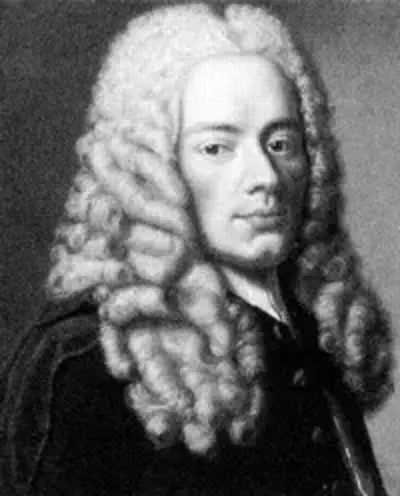
Jean-Jacques Burlamaqui was a Genevan legal and political theorist who popularised a number of ideas propounded by other thinkers.
