Joseph Story Quotes
The promulgation of the great doctrines of religion, the being, and attributes, and providence of one Almighty God: the responsibility to him for all our actions, founded upon moral freedom and accountability; a future state of rewards and punishments; the cultivation of all the personal, social, and benevolent virtues-these these never can be a matter of indifference in any well-ordered community. It is, indeed, difficult to conceive how any civilized society can exist without them.
Story, Joseph. Commentaries on the Constitution of the United States. Vol. 3, Hilliard, Gray, and Company, 1833, p. 722.


This quotation is classic in that it illustrates a fundamental difference between a political and religious view of rights. Politically a citizen is entitled to rights with no requirement or condition of responsibility. Politically, we may desire and applaud or even reward responsible behavior, but we may not condition the rights on someone’s version of responsible use of the rights. Indeed, the real test is if people have rights who are generally thought to be irresponsible. See {633640} .


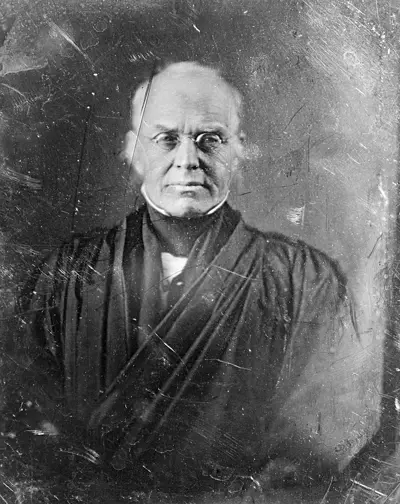
Joseph Story was an American lawyer and jurist who served on the Supreme Court of the United States from 1812 to 1845, during the Marshall Court and early-Taney Court eras. He is most remembered for his opinions in Martin v. Hunter's Lessee and The Amistad case, and especially for his magisterial Commentaries on the Constitution of the United States, first published in 1833. Dominating the field in the 19th century, this work is a cornerstone of early American jurisprudence. It is the second comprehensive treatise on the provisions of the U.S. Constitution and remains a critical source of historical information about the forming of the American republic and the early struggles to define its law.
