Pearl S. Buck Quotes
We need to restore the full meaning of that old word, duty. It is the other side of rights.
Buck, Pearl S. To My Daughters, With Love. John Day Company, 1967.


This quotation is classic in that it illustrates a fundamental difference between a political and religious view of rights. Politically a citizen is entitled to rights with no requirement or condition of responsibility. Politically, we may desire and applaud or even reward responsible behavior, but we may not condition the rights on someone’s version of responsible use of the rights. Indeed, the real test is if people have rights who are generally thought to be irresponsible. See {633640} .


This quotation might have been an inspiration for the famous JFK quotation {589867}. See Khalil Gibran {601423}, Warren G. Harding {622594} and {629021}, and Oliver Wendell Holmes Jr. {603707} for similar sentiments. Holmes preceded Broderick by a few years, but Broderick came closest to the Kennedy phraseology.


There was virtually no subject that Eleanor Roosevelt would not write about—politics, philosophy, human relations. And she would lead people to examine some of the most fundamental values that Americans held then without thinking much about them.


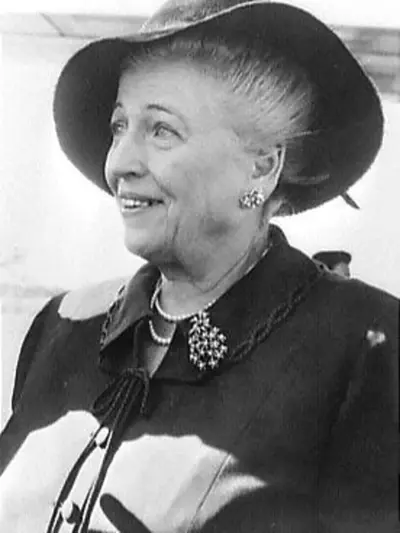
Pearl Sydenstricker Buck also known by her Chinese name Sai Zhenzhu (Chinese: 赛珍珠) was an American writer and novelist. As the daughter of missionaries, Buck spent most of her life before 1934 in Zhenjiang, China. Her novel The Good Earth was the best-selling fiction book in the United States in 1931 and 1932 and won the Pulitzer Prize in 1932. In 1938, she was awarded the Nobel Prize in Literature "for her rich and truly epic descriptions of peasant life in China and for her biographical masterpieces". She was the first American woman to win the Nobel Prize in Literature.
