Wole Soyinka Quotes
The process of decolonisation in Nigeria was a very untidy one. The British, when they were leaving finally and knew exactly who they wanted to take over, they wanted pliant government, figures, structures, they wanted to continue indirectly in effect their control over much of their colonial possessions and this was one of the very early causes of conflict.
Kreisler, Harry. "Conversation with Wole Soyinka." Conversations with History, Institute of International Studies, UC Berkeley, 16 Apr. 1998.


After the military victory in Iraq, Garner was in charge of reconstruction and getting Iraqi civil servants paid. Then the President appointed Paul Bremer as the do facto Governor of Iraq. No sooner did Bremer arrive and take charge than he alienated most Iraqi and even American officials including Garner. Bremer wanted direct control of all civilian and military staff including Garner’s staff. Garner did go home, and Bremer totally controlled a difficult situation in post-war nation building of Iraq. By the end of Bremer’s tenure, the situation had deteriorated almost beyond repair.


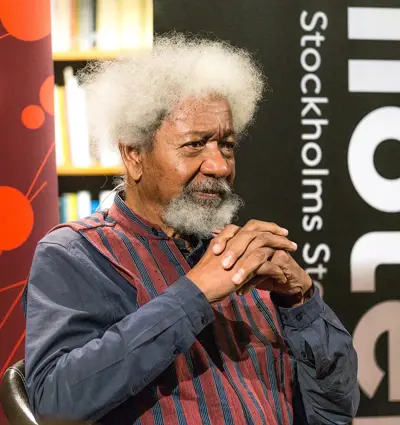
Akinwande Oluwole Babatunde Soyinka, known as Wole Soyinka (pronounced [wɔlé ʃójĩnká]), is a Nigerian playwright, novelist, poet, and essayist in the English language. He was awarded the 1986 Nobel Prize in Literature, the first sub-Saharan African to be honoured in that category. Soyinka was born into a Yoruba family in Abeokuta. In 1954, he attended Government College in Ibadan, and subsequently University College Ibadan and the University of Leeds in England. After studying in Nigeria and the UK, he worked with the Royal Court Theatre in London. He went on to write plays that were produced in both countries, in theatres and on radio. He took an active role in Nigeria's political history and its struggle for independence from Great Britain. In 1965, he seized the Western Nigeria Broadcasting Service studio and broadcast a demand for the cancellation of the Western Nigeria Regional Elections. In 1967, during the Nigerian Civil War, he was arrested by the federal government of General Yakubu Gowon and put in solitary confinement for two years.
