Milton Friedman Quotes
The problem of social organization is how to set up an arrangement under which greed will do the least harm, capitalism is that kind of a system.
Friedman, Milton. Interview with Phil Donahue. Donahue, Multimedia Entertainment, 1979.


[The metaphor of the stone tablets revers to Moses coming down the mountain and his interaction with God, carrying the 10 Commandments carved in stone tablets.]


For the previous 7 years the economy had grown but almost all the benefits went to the rich producing a dramatic period where the average worker did not even get a raise under the George W. Bush economic and tax policies.


Every economically successful American had help in amassing is fortune. The police who protected his assets, the roads and canals on which he transported his goods to market and obtained raw material. The labor force that was educated by the state. The patent system that protected his inventions. The money supply that has been made available, the registry of land and property ownerships and deeds. The courts to resolve disputes. The general affluence of the nation to buy his product or services. These have been paid for by the taxes of all Americans. All have helped the successful on their journey to wealth and their ability to keep it from those who would use violence to take it. The successful entrepreneur however has usually made extraordinary effort and exhibited extraordinary talent and skill which is why not everyone is as affluent. No one lifted themselves up by their own bootstraps, but many have with their own talent and work, climbed a very difficult ladder that the nation had in place.


Many of the far left grew disillusioned with the British Labor Movement and how it was relating to the capitalist companies, the government, and the workers. The Unions had become very undemocratic and controlling with the government pressuring both labor and companies to the degree that many felt that the institutions themselves were no longer free institutions. Ironically, they preferred the open competition of the American system at the time where unions and companies were free to fight out their differences.
Almost all of the successful welfare states have also had a strong and successful capitalistic economy.

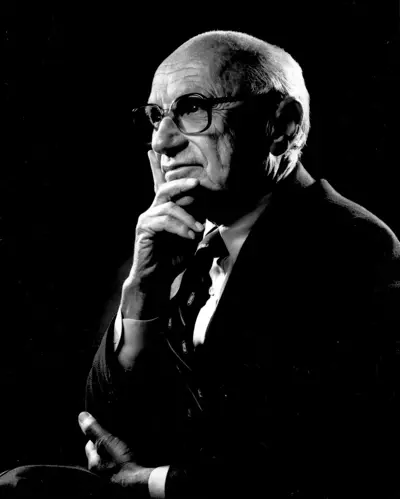
Milton Friedman was an American economist and statistician who received the 1976 Nobel Memorial Prize in Economic Sciences for his research on consumption analysis, monetary history and theory and the complexity of stabilization policy. With George Stigler and others, Friedman was among the intellectual leaders of the Chicago school of economics, a neoclassical school of economic thought associated with the work of the faculty at the University of Chicago that rejected Keynesianism in favor of monetarism until the mid-1970s, when it turned to new classical macroeconomics heavily based on the concept of rational expectations. Several students and young professors who were recruited or mentored by Friedman at Chicago went on to become leading economists, including Gary Becker, Robert Fogel, Thomas Sowell and Robert Lucas Jr.
