Peter Greenaway Quotes
The pretence that numbers are not the humble creation of man, but are the exacting language of the Universe and therefore possess the secret of all things, is comforting, terrifying and mesmeric.
Greenaway, Peter. Fear of Drowning by Numbers. Dis Voir, 1988, p. 12.


There are many systems of mathematics which are totally contrary to the world as we know and observe it; others, reflect the world as it is known. The latter we use for science. The former exist only in the mathematics world. We have mathematics today of computers that do not exist, universes that can only be imagined and some that are not even imaginable. Sometimes we realize that a mathematical system we thought had no reflection of reality, was really useful in explaining a new physical phenomenon. What is theoretical today, might need to be applied tomorrow.
3rd Earl Russell of Kingston. In mathematics the numbers can count people, autos, sins, molecules, or paintings. The mathematician does not know or care. And the mathematics is the same regardless. And the fundamentals themselves are unknown. For example, what is a number? It’s not the symbol we write; that is a numeral. Some say that it is an abstract idea that represents a quantity like 5. But what is 5? That itself is an abstraction. So few mathematicians and no layman know what they are talking about when they do mathematics. Lord Russell, with his colleague Whitehead, built up a system where they could define a number as a set with certain properties. But they take 3 large volumes full of equations in a small type font to just get to 3rd grade arithmetic and knowing what they are talking about. In politics, we also often do not know what we are talking about, but that is for a much simpler set of reasons.


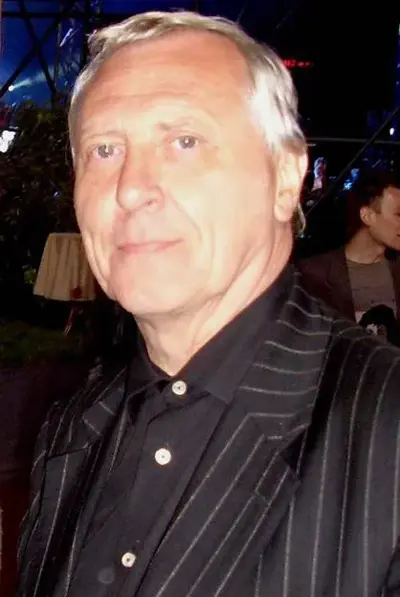
Peter Greenaway, CBE is a British film director, screenwriter, and artist. His films are noted for the distinct influence of Renaissance and Baroque painting, and Flemish painting in particular. Common traits in his film are the scenic composition and illumination and the contrasts of costume and nudity, nature and architecture, furniture and people, sexual pleasure and painful death.
