Jose de San Martin Quotes
The present national situation is such that the man who becomes its leader has no alternative to a complete dependence on one single faction, save the complete renunciation of authority, The last is what I choose
Jose de San Martin 1778-1850, President of Peru, Statement concerning his return to Europe and refusal to accept any government position, April 23, 1823, quoted in Robert Harvey, Liberators
Sourced by: Eigen's Political and Historical Quotations


In contrast to so many of the world’s leaders of newly independent countries who would rarely relinquish power, O’Higgins, Bolivar and other South Amiercan early liberators were idealists who were uncomfortable with power and were disappointed at the factions and warlords and were anxious to leave office.

5th Earl of Rosebery

The newly independent South American nations all had terrible problems and although leaders like O’Higgins were democratic by instinct and desire, they had to use non democratic means to survive and keep the governments even functioning. The factions were more than just different political parties but private armies controlled by warlords. See {584187}.


On being elected Prime Minister for the first time: 1st Earl of Beaconsfield


This is an important quotation because it was believed by most of the Founding Fathers and the American public until relatively recently. Presidential candidates would not think of publicly campaigning. The view was that anyone who was ambitious for power and authority should not be trusted with it. The idea was first stated by Plato and has been a major view of Western politics since. Many still believe it, but no one has come up with a practical alternative in a large jurisdiction where there is no way to know about the possible candidates without their initiative. Earlier American presidential candidates, although they did not campaign as we know it, got associates to do their campaigning for them. At Presidential nominating conventions, candidates would not even attend. Abraham Lincoln for example never attended the convention at which he got nominated, but he had associates lining up delagates and he was managing their efforts behind the scenes.

This is a fascinating historical quotation. The English Foreign Minister and sent a draft of his proposed policy of English involvement to make Spain more democratic to counteract the influence of France which was then England’s arch enemy. The French had a military-oriented right wing government. The Queen, although only 27 years old at the time, had a brilliant grasp of foreign policy and the sagacity of an elder statesman. (And women in the United Kingdom could not even vote.) She realized that once England was involved in nation building and backing one party in Spain, England would be responsible for whatever that party ended up doing, and yet England really could not control the situation. Corruption, violations of civil rights, impoverishment all might occur, and England would have to defend those things lest the French who would then support the opposition would gain an upper hand in a proxy war. The situation was very similar to the United States getting involved in Vietnam and supporting the South Vietnam government which, despite U. S. efforts to the contrary, was totally corrupt, inept, religiously discriminatory, and totally inept in providing good government to the people. A similar situation occurred with the American intervention in Afghanistan where the President operated a totally corrupt and inept government and we were forced to support him. On other occasions she goes even further and actually writes new copy of policies personally. Note that the formality of the time required that the Queen refer to herself in the third person and not the first.


President Roosevelt had a meeting with the then general, for the first time, and in the discussions Roosevelt felt that De Gaulle was taking too much authority upon himself and wanted to make all decisions for France that should be made by a government. Roosevelt reminded De Gaulle that he was not an elected official. Winston Churchill who was also present privately told Roosevelt that for his part he would burn him but his government wouldn’t allow it.


The first non-PRI President in over 70 years. Before Fox, the corruption of Mexican Presidents was rampant.


After the King’s appointment in 1921 she “advised” him on establishing this regime and operating the government. At a time that women could not even vote in England, Bell was a kingmaker and major power in an area of the world that was much more sexist than England at the time.
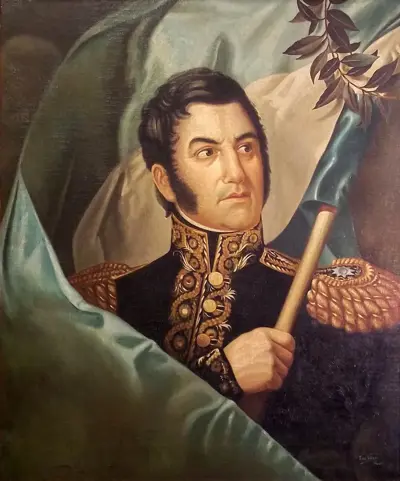
José Francisco de San Martín y Matorras, known simply as José de San Martín (Spanish pronunciation: [xoˈse ðe san maɾˈtin] (listen)) or El Libertador of Argentina, Chile and Peru, was an Argentine general and the prime leader of the southern and central parts of South America's successful struggle for independence from the Spanish Empire who served as the Protector of Peru. Born in Yapeyú, Corrientes, in modern-day Argentina, he left the Viceroyalty of the Río de la Plata at the early age of seven to study in Málaga, Spain.
