David Hume Quotes
The power of imprisonment … being the most natural and potent engine of arbitrary government, it is absolutely necessary to remove it from a government which is free and legal.
David Hume, 1711-1776, Scottish Philosopher & Historian, The History of Great Britain, 1780
Sourced by: Eigen's Political and Historical Quotations


While a Congressman under the Truman administration, Johnson was critical of federal measures to enforce civil rights.

This has been one of the fundamental debates in America since its founding. Which is more important, the preservation of civil rights and personal liberty or the supremacy of the law and the stability of our institutions. In war, the tension is always existent. In law enforcement, there is also a common conflict. Prohibition, like the later War on Drugs, was not able to be enforced without the invasion of personal rights. Americans decided that Prohibition benefits were not worth it/ The debate is ongoing with respect to the War on Drugs.


In the aftermath of 9-11, there was a call for giving the law enforcement agencies more authority and the Patriot Act was passed in haste and fear. Some law enforcement personnel then went about picking up Arab Americans and in many cases holding them incommunicado without any charges. No terrorists were discovered by this process and yet good American citizens were abused, traumatized and insulted. In our zeal to protect American freedom, we actually began to resemble some of the capricious and abusive practices of our undemocratic enemies. There were other abuses allowed under the Patriot Act, but at the time of this writing the extent had not yet been revealed, but the refusal of the authorities to make public the national security benefits suggests that there was not much national security benefit and much abuse.


The Bank was privately owned. Jackson was a major opponent of the Bank. See his description {630650} .


The justice expanded upon the 18th century quotation of Manon Jeanne Roland, 1754-1793


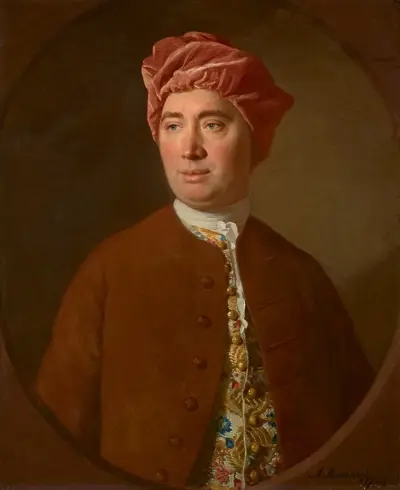
David Hume, Hume strove to create a naturalistic science of man that examined the psychological basis of human nature. Hume argued against the existence of innate ideas, positing that all human knowledge derives solely from experience. This places him with Francis Bacon, Thomas Hobbes, John Locke, and George Berkeley as a British Empiricist.
