Ouida Quotes
The philosopher stands at his desk in the lecture hall, and demonstrates away the soul of man, and with exact thought measures out his atoms and resolves him back to gas and air. But the revolutionary, below in the crowd, hears, and only translates what he hears thus to his brethren: 'Let us drink while we may; property is robbery; this life is all; let us kill and eat; there is no God.
Ouida. Wisdom, Wit, and Pathos of Ouida. Selected by F. Sydney Morris, J. B. Lippincott & Co., 1884.


At the time, Capetown was under the control of the Dutch East India Company which had recruited Gordon from Scotland. There was a wave of liberality following the Enlightenment, the American Revolution, and the very vocal English, anti-slavery, reformers. The Dutch were concerned mainly with making money, and that they thought that meant stability and the status quo. Gordon was their strong spokesman on this. Like American Southern slave owners, Gordon read the Bible as God endorsing slavery and the inferiority of Blacks. Thus, reformers did not "believe in God any more".


This unusual quotation was made to historian Ron Radosh. before Bnnon qA ppoibnrws to a critical position in government by Donald Trump. It is not known if Trump was aware of the radical thinking of this man who was joining a conservative, republican Administration in a national security role.


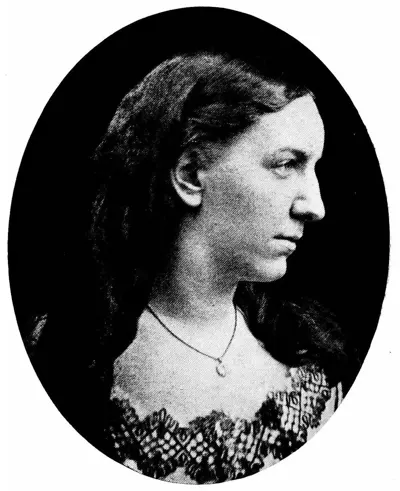
Ouida was the pseudonym of the English novelist Maria Louise Ramé (although she preferred to be known as Marie Louise de la Ramée). During her career, Ouida wrote more than 40 novels, as well as short stories, children's books and essays. Moderately successful, she lived a life of luxury, entertaining many of the literary figures of the day. Under Two Flags, one of her most famous novels, described the British in Algeria. It expressed sympathy for the French colonists—with whom Ouida deeply identified—and, to some extent, the Arabs. The novel was adapted for the stage, and was filmed six times. Her novel A Dog of Flanders is considered a children's classic in much of Asia. The American author Jack London cited her novel Signa, as one of the reasons for his literary success. Her lavish lifestyle eventually led her to penury, and her works were put up for auction to pay her debts. She died in Italy from pneumonia. Soon after her death, her friends organized a public subscription in Bury St Edmunds, where they had a fountain for horses and dogs installed in her name.
