Christopher Hitchens Quotes
The people who tend to raise antiwar slogans will do so generally when it's American or British interests involved.
Hitchens, Christopher. For the Sake of Argument: Essays and Minority Reports. Verso, 1993.


She and her husband, like many of the "America Firsters", believed that Hitler should be allowed to overrun Europe and Russia.

This is a variant of a famous Clauswitz quotation {635143}.


with Russia over the independence of Berlin and West Germany


Hoover and most Republicans were generally opposed to sanctions and an instrument of foreign policy. 25 years after his presidency, the Republican Party started embracing sanctions as a tool of foreign policy and by the end of the 20th century, Republicans were sanction hawks. This quotation illustrates how American political parties and their philosophies change over time.


This speech was given 5 months before President Georg W, Bush initiated the invasion of Iraq. Politicians either supported the idea of an Iraq War or simply remained silent lest they be labeled unpatriotic. Obama not only opposed the war, but by 2007 most Americans had also come to believe that Bush’s invasion was a “dumb” and “rash” war.

Lodge was particularly concerned that under the proposed treaty the United States would be obligated to support the League of Nations military efforts regardless of American public opinion or Congressional action.

See Carl Schurz {33636} for an 1872 version and G. K Chesterton for perspective {597471}.


Charles Wilkes, a Union Navy Captain enforcing the naval blockade of the South, intercepted a British mail ship in the Caribbean and discovered two Confederate diplomats on board. He took them into custody to the cheers of Congress. England, however, was outraged that passengers—diplomats—on one of their ships was seized after boarding. This was technically an act of war. Abraham Lincoln, to the distress of many in Congress ordered the Confederate diplomats released explaining with this quotation.


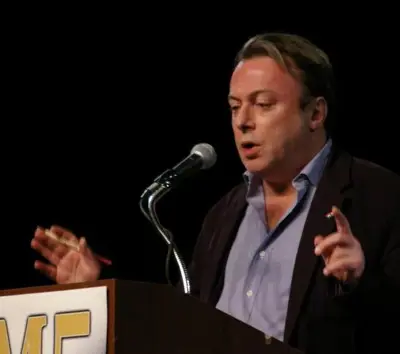
Christopher Eric Hitchens was an English-American intellectual, polemicist, and socio-political critic, who expressed himself as an author, orator, essayist and columnist. He wrote, co-wrote, edited or co-edited over 30 books, including five of essays on culture, politics and literature. Having contributed to several publications, he is broadly regarded as one of the most influential atheists of all time.
