C. L. R. James Quotes
The Paris Commune was first and foremost a democracy. The government was a body elected by universal suffrage.
James, C. L. R. World Revolution, 1917-1936: The Rise and Fall of the Communist International. London: Martin Secker & Warburg, 1937.


At the time, the convention delegates picked the party Presidential nominee without any direct role of the voters. The so called “smoke-filled room” of party bosses. When TR decided to run again for the Presidency there was an incumbent Republican President, Taft. However most Republicans in the country preferred Roosevelt who had served two very successful terms as President. But there were no primary elections in those days and there was no way for the party voters preferences to heavily influence the process. The Party bosses, who never liked TR because of his independence, nominated Taft. Roosevelt ran as a 3rd party candidate and actually out polled Taft. However, the Democrat, Woodrow Wilson got more votes than Roosevelt, who would have easily won if the republicans had nominated TR as the majority of the party wanted.


Chief legal officer of a Dutch town. He wanted to have a plebiscite in each town on major issues before the assembly so as to instruct the representative as to how to vote. The graphic is a painting of Adriaan van Zeebergh and his board of the Teylers Stichting.

This is a very important quotation. Abraham Lincoln obtained a printed copy of Parker’s sermon and underlined this quotation on his copy. Later when he was President he used a slight variation of Parker’s last phrase in the last line of his famous Gettysburg Address.
In the EU most of the government power is dominated by appointed elites and not elected representatives.
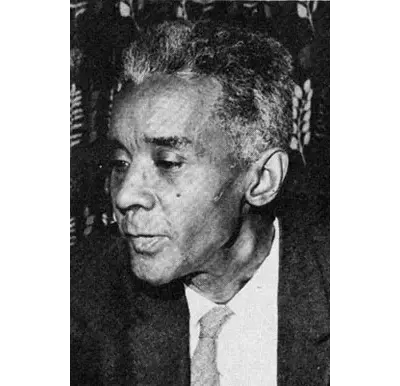
Cyril Lionel Robert James, who sometimes wrote under the pen-name J. R. Johnson, was a Trinidadian historian, journalist and Marxist. His works are influential in various theoretical, social, and historiographical contexts. His work is a staple of Marxism, and he figures as a pioneering and influential voice in postcolonial literature. A tireless political activist, James is the author of the 1937 work World Revolution outlining the history of the Communist International, which stirred debate in Trotskyist circles, and in 1938 he wrote on the Haitian Revolution, The Black Jacobins.
