Ellen Swallow Richards Quotes
The only trouble here is they won't let us study enough. They are so afraid we shall break down and you know the reputation of the College is at stake, for the question is, can girls get a college degree without ruining their health?
Hunt, Caroline L. The Life of Ellen H. Richards. Whitcomb & Barrows, 1912, p. 64.


The number of women who studied Physics and sophisticated sciences in Germany at the time were few and far between. Ironically, Einstein married one of the few. However, the marriage failed for many reasons and his subsequent marriage was not to a scientist. Other conversations with him in later years revealed that his belief was that women were constitutionally unsuited to creative, theoretical science—Einstein’s type of science was almost purely abstract and mathematical. See {588596}.


In contemporary Iran, no one has any freedom in the International and Western sense of freedom. There is no freedom of speech, freedom of assembly, freedom of the press, freedom of religion, freedom to travel, freedom of the press, freedom of dress, or other fundamental freedoms of not only the West but the United Nations Declaration of Human Rights. However, within those restrictions, women tend to be treated more equally than in other Islamic Middle Eastern nations. Not completely equal as they have many additional restrictions that males do not have, but they can work, freely, teach and hold some positions of responsibility and power which women may not do in much of the Islamic world.

She was one of the first female physicians in England. However, she could not study there or sit for her examinations. She trained in the Scotland, Ireland and Swizerland where she earned her medical degree.


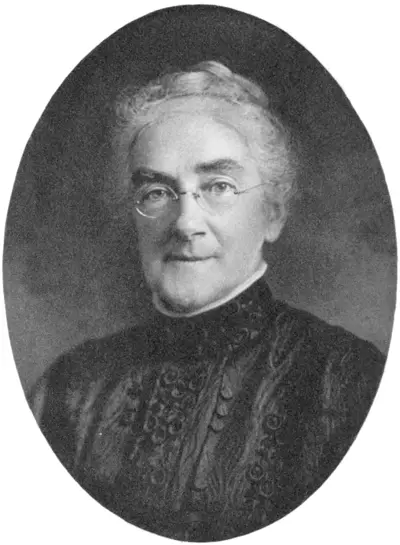
Ellen Henrietta Swallow Richards was an industrial and safety engineer, environmental chemist, and university faculty member in the United States during the 19th century. Her pioneering work in sanitary engineering, and experimental research in domestic science, laid a foundation for the new science of home economics. She was the founder of the home economics movement characterized by the application of science to the home, and the first to apply chemistry to the study of nutrition.
